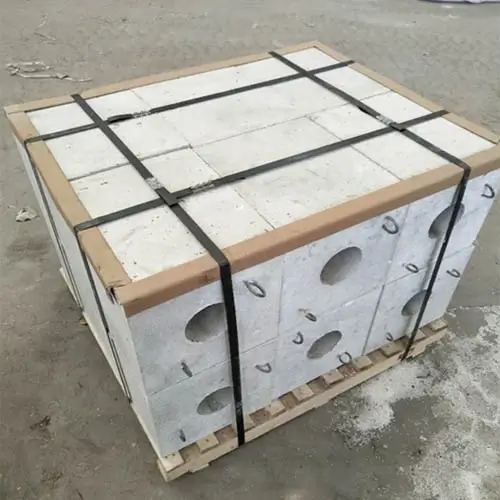
1.The impact of changes in the function of steel ladles on refractory materials
With the development of secondary refining, the ladle has evolved from a container for molten steel into a crucial metallurgical device for secondary refining. Consequently, the operating conditions for refractory materials used in ladles have changed significantly, primarily in the following aspects:
(1) The temperature of the molten steel in a secondary refining ladle is significantly higher, typically 50-100°C higher than in a regular ladle, and may exceed 150°C during refining. Higher temperatures lead to a significantly faster erosion of refractory materials by slag and molten steel.
(2) The circulation of molten steel in a secondary refining ladle is intensified. The use of technologies such as argon injection, electromagnetic stirring, and vacuum treatment exacerbates the scouring and abrasive effects of the molten steel on refractory materials.
(3) The erosiveness of the slag in a secondary refining ladle is enhanced. Due to the need for deep desulfurization and phosphorus slag smelting operations in secondary refining furnaces, the slag has high basicity and a large volume, significantly intensifying its erosive effect on refractory materials.
(4) The steel-holding time of secondary refining ladles is significantly extended, by one to several times compared to ordinary ladles, resulting in a significantly shorter service life of the refractory materials used in the ladles.
(5) Since secondary refining ladles are often used under high-temperature vacuum conditions, the evaporation rate of the refractory materials is accelerated under vacuum conditions, which also reduces the erosion resistance of the refractory materials.
2.What are the requirements for refractory materials used in steel ladles?
The development of secondary refining technology for steel ladles necessitates that refractory materials used in steel ladles must meet the following requirements during use:
(1) High temperature resistance. It can withstand prolonged exposure to high-temperature molten steel without melting or softening.
(2) Thermal shock resistance. It can withstand repeated loading and unloading of molten steel without cracking or peeling.
(3) Slag erosion resistance. It can withstand the corrosive effects of molten slag and changes in slag basicity on the lining.
(4) Sufficient high-temperature mechanical strength. It can withstand the agitation and scouring effects of molten steel.
(5) The lining has a certain degree of expandability. Under the action of high-temperature molten steel, the lining components form a tight, unified whole.
3.Conditions required for working lining of steel ladle
The working lining of the ladle is a critical part that comes into contact with molten steel and slag. During use, it is subject to erosion, scouring, melting, and thermal shock damage from molten steel and slag. Therefore, the following conditions should be met during its use:
(1) The working lining should be designed for simple equipment and convenient construction, reducing labor intensity and increasing labor productivity. It should have good adaptability to baking, reducing ladle baking energy consumption while increasing ladle utilization, extending ladle service life, and reducing the number of spare ladles.
(2) Under high-temperature conditions, it should possess good high-temperature performance, requiring not only high refractoriness and certain high-temperature strength but also good chemical stability to ensure no secondary oxidation or contamination of the molten steel under high-temperature conditions, and to maintain the quality of the billet.
(3) During use, it should have good resistance to slag erosion and penetration, as well as resistance to scouring by molten steel and slag, which helps to extend the service life of the ladle working lining, reduce the consumption of refractory materials, and minimize refractory material contamination of the molten steel.
(4) The working lining should have good thermal shock resistance and good volume stability, preventing cracking upon contact with molten steel and ensuring the integrity of the ladle.
(5) The working lining of the ladle should also have low thermal conductivity and good insulation performance to reduce heat loss from the tundish and maintain the stability of the molten steel temperature.
(6) The working lining after use should be easy to disassemble, and the working layer and permanent layer should be easily separated to reduce damage to the permanent lining of the ladle caused by the refractory material, thus helping to extend the service life of the ladle.
4.Causes of damage to refractory materials used in steel ladles
Steel ladle turnover process: converter/electric furnace tapping → secondary refining → continuous casting → ladle preparation → waiting for tapping. Normal turnover time varies from 100 to 140 minutes depending on the steel grade and continuous casting machine. The ladle tapping temperature is 1680-1700℃, and the slag loading time is 100-120 minutes. Typical ladle slag composition (%) for continuous casting is: Al₂O₃ 17%~26%, SiO₂ 8%~10%, CaO 42%~47%, MgO 5%~11%, FeO 18%~22%. If the smelting process for ultra-low carbon steels such as silicon steel, bridge steel, and automotive sheet steel requires vacuum treatment, and employs methods such as argon blowing and stirring at the bottom of the ladle, and electric arc heating, reducing atmosphere within the furnace, white slag refining, and gas stirring in an LF furnace, to enhance thermodynamic and kinetic conditions, desulfurization, alloying, and temperature rise, the resulting slag basicity range is wide, the temperature of the molten steel and slag is higher, the residence time of the molten steel in the ladle is prolonged, thermal shock is strong, and the stirring force is large, thus exacerbating the damage to the ladle lining.
The causes of the damage are as follows:
First, ladles are used to transport molten steel at high temperatures. During transport, the molten steel, around 1680°C, and slag erode the ladle, especially the slag line area, where erosion is severe and a crucial factor determining its lifespan.
Second, ladle refining processes such as LF (Ladle Fluid) severely damage the unburned molten steel bricks.
Third, the lining experiences drastic temperature changes during tapping and molten steel flow from the converter, leading to cracks and spalling of the lining material.
Fourth, when the ladle is loaded with molten steel from the converter, the high-temperature molten steel exerts a strong mechanical scouring effect on its bottom, making the lining material in that area susceptible to thermal shock damage.
5.How to reduce spalling of refractory materials in steel ladles
During use, molten slag easily penetrates deep into refractory materials from the heated surface, significantly reducing the porosity near the working surface and causing densification, resulting in a thick modified layer. When the temperature changes drastically, cracks parallel to the working surface appear at the interface between the modified layer and the original brick layer, causing the bricks to peel off and break. To reduce structural spalling of refractory materials, the depth of slag penetration should be reduced, which can be addressed from the following aspects:
(1) Improve the slag penetration resistance of refractory materials;
(2) Reduce the porosity of refractory materials, thereby reducing the slag erosion pathways;
(3) The slag reacts with the refractory materials to form a high-melting-point compound barrier, preventing slag penetration;
(4) Increase the viscosity of the slag. The higher the viscosity of the slag, the worse its corrosiveness to refractory materials.
6.The main function of steel ladle permeable bricks
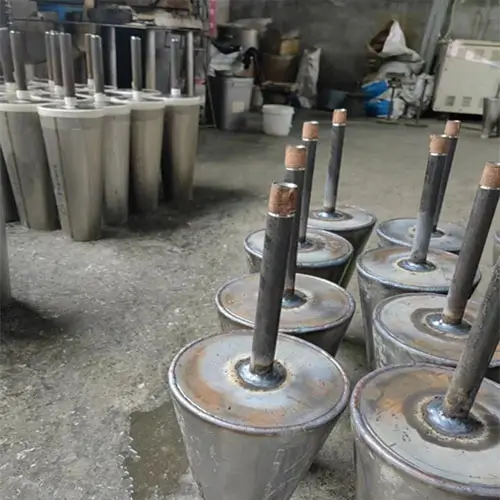
The permeable brick in the ladle is a crucial functional component in the secondary refining process, with the following main functions:
(1) It can regulate the uniform distribution of molten steel temperature within the ladle to achieve the optimal casting temperature for the existing process.
(2) By blowing air to agitate the ladle, it can ensure the uniform distribution of alloys and deoxidizers.
(3) It can carry non-metallic inclusions from the molten steel into the slag to meet the required cleanliness of the molten steel.
To achieve these functions, inert gas used in refining is blown into the ladle through the permeable brick. At the contact surface between the permeable brick and the molten steel (i.e., the working surface of the permeable brick), under sufficient pressure, a large number of air bubbles are blown out, forming a gas jet stream that agitates the molten steel throughout the ladle, promoting its flow and homogenizing the temperature and composition within the ladle. Simultaneously, the continuously ejected air bubbles, through interfacial interaction, carry non-metallic inclusions from the molten steel into the slag, achieving the goal of purifying the molten steel.
7.Performance requirements of steel ladle permeable bricks
To meet the aforementioned metallurgical functions, permeable bricks must possess the following key properties:
(1) Good permeability. Permeability is one of the important parameters for evaluating the quality of permeable bricks. Studies have shown that the stirring power of molten steel is directly proportional to the flow rate of the blown gas; stirring power directly affects the stirring efficiency of molten steel, and only sufficient stirring can achieve a good stirring effect. When the argon blowing volume is constant, the more argon bubbles blown out, the more beneficial it is for the degassing and stirring of the molten steel.
(2) High-temperature corrosion resistance. Refining ladles have very strict requirements in terms of temperature and time, with the highest temperature often reaching above 1750℃ and the refining time sometimes reaching tens of minutes. During the refining operation, the basicity of the slag has a significant impact on the lifespan of permeable bricks. Therefore, permeable bricks are subject to corrosion by highly permeable alkaline slag at high temperatures, resulting in rapid damage.
(3) High-temperature wear resistance. During bottom-blowing argon in refining ladles, the rapid flow of molten steel significantly increases the scouring and wear on the furnace lining material, bottom permeable bricks, and seat bricks. During hot repairs, to remove residual steel and slag from the surface of the permeable bricks and restore their permeability, oxygen blowing is required to melt the slag adhering to the surface. Simultaneously, injection gas is blown into the permeable bricks to remove the molten slag. During this cleaning process, the permeable bricks are subjected to the scouring effect of high-speed airflow, thus requiring excellent high-temperature wear resistance.
(4) Good thermal shock resistance. Due to the intermittent operation of the ladle, the ends of the permeable bricks are subjected to the high temperature of the molten steel when it is poured in, causing a sudden temperature rise. During argon blowing, they are cooled by the cold airflow, generating significant thermal stress within the material. Furthermore, the injection of molten steel into an empty ladle also causes significant temperature changes. Therefore, the operating conditions for permeable bricks are extremely harsh, making them highly susceptible to thermal spalling and structural spalling. (5) The installation must be simple and safe. The permeable bricks are installed inside the bottom seat bricks of the ladle, where the working conditions are extremely harsh. The lifespan of the permeable bricks cannot be synchronized with the lifespan of the entire ladle, so the permeable bricks need to be replaced. Therefore, the installation and operation must be simple and the use must be safe and reliable to avoid steel leakage and seepage incidents.
8.Common classifications of steel ladle permeable bricks
After years of development, permeable bricks commonly fall into three structural types: dispersed type, slotted type, and through-hole type.
Dispersed type permeable bricks are the earliest form. Due to the high porosity of the material itself, the numerous pores provide channels for inert gases. The disadvantages of this porous surface type are low strength, poor erosion resistance, susceptibility to penetration by molten steel and slag leading to spalling, and poor mixing effect on molten steel. Currently, it is rarely used in steel ladle permeable bricks in China.
Slotted type permeable bricks include two forms. One type consists of several pre-formed thin plates assembled to form a slot in the center, with the exterior castable refractory, known as the “jointed type.” The disadvantage of this type is poor controllability of the blown gas. The other type has dozens of through-holes pre-cast within the brick body, commonly known as the “slotted type.” Compared to the former, slotted type permeable bricks have advantages such as longer lifespan, higher blowing rate, larger air flow rate, and better mixing effect.
Straight-hole permeable bricks are made by embedding a varying number of thin steel pipes within the brick. The gas channels consist of numerous straight, micro-channels, and they are formed using a casting method. Compared to dispersion-type permeable bricks, straight-hole permeable bricks offer superior mixing performance and have a service life 2-3 times longer. However, their disadvantage is a limited gas flow rate, often leading to refining failures in the later stages of use due to reduced permeability or blocked airflow.
9.Installation method of steel ladle permeable bricks
There are two installation methods for permeable bricks: internal and external. Internal installation involves pre-assembling the permeable bricks and seat bricks outside the ladle. During ladle construction, the location of the permeable bricks at the bottom is cleared, the curtain bricks are laid, and then the permeable bricks with seat bricks are hoisted to this position. The bottom and lining are then laid sequentially. External installation consists of seat bricks, sleeve bricks, and permeable bricks. During ladle construction, after the seat bricks are installed at the bottom, the bottom and walls are laid. Finally, the sleeve bricks and permeable bricks are evenly coated with fire mortar and forcefully inserted into the seat. A pad brick is then placed at the bottom of the sleeve bricks and permeable bricks, a flange is installed, and the ladle is baked. Internal installation permeable bricks are used when the lifespan of the ladle lining bricks and permeable bricks is synchronized, while external installation is suitable for situations requiring frequent permeable brick replacement. Due to the low safety, poor reliability, and cumbersome replacement of internal installation permeable bricks, almost all ladles currently use external installation permeable bricks.
10.Common materials of steel ladle permeable bricks
Currently, breathable bricks are made of materials such as corundum, chrome corundum, high alumina, and magnesium chrome.
A. Corundum-Spinel System Permeable Brick
Single-phase corundum castables have unsatisfactory slag resistance and thermal shock resistance, while spinel materials exhibit excellent slag erosion resistance. Based on the principle of multiphase modification to improve refractory material performance, high-purity fused spinel is added to corundum castables to enhance their properties. The raw materials used are tabular corundum as granules, fused white corundum, spinel, and active α-Al₂O₃ micro powder as fine powders, and calcium aluminate cement as a binder. Its advantages include significantly improved thermal shock resistance and slag resistance; the disadvantage is that during high-temperature treatment, the spinel undergoes volume changes, resulting in poor volume stability of the permeable bricks, which is difficult to control during production.
B. Corundum-Chromium Oxide System Permeable Brick
To further improve the permeable bricks’ resistance to steel slag erosion, a certain amount of chromium oxide micro powder is added to the product. Its main raw materials are tabular corundum as granules, finely powdered tabular corundum and chromium oxide, and calcium aluminate cement as a binder. At high temperatures, chromium oxide and aluminum oxide form a high-temperature solid solution, while simultaneously forming a partial solid solution with a small amount of magnesium oxide, MgO·Cr₂O₃-MgO·Al₂O₃. This solid solution significantly enhances resistance to corrosion by Fe₂O₃ or slag and has very high viscosity, effectively preventing the penetration and corrosion of steel slag at high temperatures. Simultaneously, a small amount of Cr₂O₃ can inhibit excessive Al₂O₃ growth, reduce intracrystalline stress, and improve the material’s physical properties. However, if too much is added, corundum grain growth will be excessively inhibited, generating internal stress and thus reducing the material’s physical properties. Furthermore, Cr₂O₃ is relatively expensive, and adding too much will significantly increase costs; additionally, Cr₂O₃ causes serious environmental pollution.
C. Corundum-Spinel System Permeable Sealing Brick
Corundum-spinel system permeable sealing bricks are the most widely used material. The main raw materials are tabular corundum, α-Al₂O₃ micro powder, and spinel, bonded with pure calcium aluminate cement. Its advantages include the strong resistance of spinel to acids and alkalis, and its high melting point, resulting in excellent performance. Aluminum-magnesium spinel has strong resistance to alkaline slag and is relatively stable against iron oxides. When in contact with magnetite at high temperatures, it reacts to form a solid solution, improving the high-temperature corrosion resistance of the permeable sealing brick. Simultaneously, the difference in the expansion coefficients between the minerals in the solid-solution MgO or Al₂O₃ spinel provides better thermal shock resistance. The disadvantage is that when MgO and Al₂O₃ form spinel according to the theoretical composition, approximately 8% volume expansion occurs, making densification difficult during firing, and the volume change of the permeable sealing brick is difficult to control.
D. Corundum-Chromium Oxide System Permeable Sealing Brick
The corundum-chromium oxide system permeable sealing brick is developed based on the corundum-spinel system to improve the high-temperature spalling resistance of permeable sealing bricks. The main raw materials are tabular corundum, α-Al₂O₃ micro powder, industrial chromium oxide, and spinel, bonded with pure calcium aluminate cement. Its advantages include significantly increased resistance to erosion by iron oxide slag through the Al₂O₃-Cr₂O₃ solid solution, while spinel enhances the performance of the sealing brick. Adding a small amount of Cr₂O₃ inhibits excessive alumina crystal growth, thereby reducing internal crystal stress and improving the thermal shock resistance, erosion resistance, and corrosion resistance of the permeable sealing brick. The disadvantages are that excessive Cr₂O₃ severely affects the growth rate of corundum grains, thus reducing the material’s physical properties; furthermore, Cr₂O₃ causes serious environmental pollution, violating national sustainable development requirements.
11.Damage mechanism of permeable bricks in steel ladles
The operation of permeable bricks is discontinuous, and different physical and chemical corrosions occur at different times throughout the ladle’s turnover cycle. In practice, the damage to permeable bricks can be categorized as follows:
(1) Oxygen purging. After tapping and before the next steel intake, the ladle undergoes hot repair in the hot repair area. During this time, the working surface of the permeable bricks needs to be purged with oxygen to remove residual steel and slag. Oxygen purging is beneficial for the normal use of the permeable bricks, ensuring the cleanliness of the working surface and the unobstructed gas passage, allowing for smooth ladle turnover. However, because it is difficult to accurately determine the thickness of residual steel and slag on the working surface of the permeable bricks in the hot repair area, accidental burning of the permeable bricks may occur after removing the residue. This situation can be more serious if the ladle bottom condition is poor or if the operator in the hot repair area makes a mistake. During oxygen purging, the temperature reaches over 2000℃, and the high-temperature airflow is extremely damaging to the permeable bricks. The melting loss in these few minutes is often 2-3 times higher than the normal refining erosion loss.
(2) Mechanical wear. The high-speed and forceful scouring of the bottom of the ladle by molten steel during tapping also accelerates the erosion of the permeable bricks. Studies on the erosion of permeable bricks using hydraulic model tests have revealed that when a low-speed gas flow enters the molten pool, the gas flow rebounds and impacts the leading edge of the permeable brick, exerting a certain impact force on the refractory material around the gas inlet. When the gas flow rate is further increased, the reverse pulse frequency decreases, but the reverse impact intensity further increases. Furthermore, when argon blowing enters normal injection mode, strong bubbles form a gas jet stream, which intensifies the stirring at the bottom of the ladle, exacerbating the liquid phase movement at the bottom. This two-phase entanglement subjectes the permeable brick to strong shear and impact stress. The shearing and scouring effect of this entanglement is particularly pronounced when the permeable brick is higher than the base brick; the portion higher than the base brick is generally eroded away after one use. Therefore, this situation often easily occurs when replacing permeable bricks. Additionally, if the valve is quickly closed after refining, the reverse impact of the molten steel will also accelerate the damage to the permeable brick.
(3) The effect of thermal stress. The refractory material on the working surface of the permeable brick, especially around the vent, is in direct contact with high-temperature molten steel and is affected by the high-temperature molten steel and the continuously flowing cold air, resulting in a large temperature gradient. Due to repeated use, the permeable brick is subjected to rapid heating and cooling, especially near the vent, where the thermal stress is greater, making it prone to ring cracks and fracture.
(4) Chemical corrosion. The working surface of the permeable brick is in contact with slag and molten steel for a long time. Throughout the service life, the molten slag continuously wets and penetrates into the brick. Oxides such as MnO, MgO, SiO₂, FeO, and Fe₂O₃ in the molten steel and slag react with the brick:
12CaO+7Al₂O₃═12CaO·7Al₂O₃
FeO+Al₂O₃═FeO·Al₂O₃
2MnO+SiO₂+Al₂O₃═2(MnO)·SiO₂·Al₂O₃
The generated low-melting-point substances such as FeO·Al₂O₃, 2(MnO)·SiO₂·Al₂O₃, and 12CaO·7Al₂O₃ are washed away, causing the permeable bricks to be eroded.
12.Ways to improve the service life of permeable bricks in steel ladles
The following are ways to improve the service life of permeable bricks: (1) Add zirconium-based materials and tabular corundum to improve the spalling resistance of the permeable bricks. (2) Optimize ultrafine powder. (3) The stirring intensity of molten steel is proportional to the amount of argon blown. (4) Uniform material distribution improves the volume stability of the permeable bricks.
In addition to the above points, the following measures can also be considered to improve the service life of steel ladle permeable bricks:
Optimize the design and materials of the permeable bricks: Improve their erosion resistance by adjusting the materials and structure of the permeable bricks. For example, large aggregate particles can be added to the permeable bricks to enhance their wear resistance. In addition, make integral double-core steel ladle permeable bricks. When one air core reaches the end of its service life, the air valve can be replaced to the other air core for continued use, thereby extending the overall service life of the permeable bricks.
Improve the installation and masonry methods: Ensure that the installation operation of the permeable bricks is standardized to avoid local suspension and misalignment. Thoroughly clean the steel shell of debris before installation and level the bottom with fire clay or other padding materials to prevent local suspension of the bottom of the seat brick. When constructing the ladle bottom, appropriate gaps should be left and filled with suitable grout to reduce the impact of expansion on the bedding bricks.
Controlling reasonable bottom blowing parameters: Excessive bottom blowing pressure will cause violent turbulence of molten steel, increasing the chance of molten steel contact with air and leading to secondary oxidation; insufficient pressure will cause bottom blowing failure, affecting metallurgical results. Therefore, reasonable control of bottom blowing parameters is key to improving the lifespan of permeable bricks.
Regular maintenance and inspection: Regularly inspect and maintain the bottom blowing device to prevent air leakage and gas loss. Replace damaged parts promptly to avoid production interruptions and increased costs due to equipment failure.
Optimizing the service environment of permeable bricks: Optimizing the service environment of permeable bricks reduces their corrosive effect on refractory materials. For example, optimizing the ladle refractory materials, adjusting the permeable brick materials, and changing the external shape can improve the ladle’s erosion resistance, thereby extending its service life.