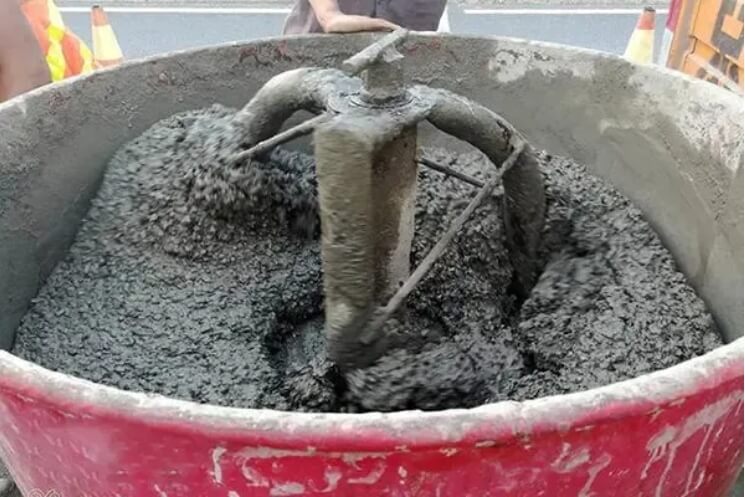
I. Construction of Refractory Castables
- Preparation
Before construction, the mixing equipment, transportation vehicles, vibrating tools, and the area to be poured must be inspected for their integrity and cleanliness; the formwork, surrounding refractory bricks, and insulation layer’s anti-water loss measures must be checked; rust removal of equipment, anchors, anchor brick type, size, arrangement, welding quality, and expansion compensation measures for metal anchors must be checked; the quality of the refractory material and the construction water must be checked to ensure they meet requirements. Furthermore, power must be maintained and construction uninterrupted during refractory material pouring.
The formwork used for refractory material pouring must be made of non-absorbent materials. If wooden formwork is used, a waterproof coating must be applied to prevent water loss from the refractory material. Water loss reduces the fluidity of the refractory material, making it difficult to remove air bubbles and compact it. Steel formwork must be coated with a release agent to prevent the formwork from sticking to the refractory material. When reusing, the formwork must be cleaned, then oiled, and then reused.
- Mixing
① A forced mixer should be used. The mixer must be pre-cleaned and rinsed thoroughly with water, and must not contain lime, mud, silicate cement, or other impurities. If it has been used to mix phosphate-bonded amorphous materials, the equipment must be thoroughly cleaned before it can be used to mix cement-bonded castables.
② The mixing quantity should be determined according to the size of the mixer and the construction conditions. The mixing volume at one time should not exceed 200 kg. With the specified water volume, the mixed castable must achieve sufficient fluidity.
③ Pour all components of the castable into the mixer and dry mix for 3 minutes. Then add clean tap water. When adding water, first add 90% of the reference water volume for the castable, then slowly add the remaining water to ensure the fluidity of the slurry meets the requirements. The wet mixing time should not be less than 5 minutes.
④ The castable must be used in whole cans and bags. The mixed castable should be poured quickly and used within 30 minutes from the time water is added. The wet material that has already partially set must not be forced into shape, nor can it be mixed with water and reused; it must be discarded.
- Vibration
① The mold must be airtight to prevent grout leakage. The refractory poured into the mold frame should be compacted in layers using a vibrator as soon as possible. Each layer should not exceed 300mm in thickness, and the vibration interval should be approximately 250mm. Do not repeat vibration on already compacted areas to avoid segregation.
② During vibration, avoid touching the anchors and do not damage the insulation layer. Wait until grout appears on the surface of the refractory and most air bubbles are expelled before slowly withdrawing the vibrator.
③ Pouring should be continuous. The next layer of refractory should be applied promptly before the previous layer initially sets. If the construction interval exceeds the initial setting time, it should be treated according to the requirements for construction joints.
- Curing
① For cement-bonded castables, immediately cover any exposed parts with plastic or straw bags after the surface has dried. However, chemically bonded castables do not require surface covering.
② After final setting, the formwork for the castable can be removed. However, load-bearing plates should not be removed until the strength reaches 70%.
③ The curing temperature for refractory castables should be between 10 and 35℃. Excessive temperature will cause hydration products to transform into C3AH6, potentially leading to a decrease in strength; excessively low temperature will delay hardening.
- Special Construction Procedures
During hot weather, the castable refractory should be stored in a cool, shaded place beforehand. Construction should be scheduled for early morning or late evening whenever possible, and both water and refractory temperatures should be controlled below 30℃. After pouring, cover the refractory promptly and frequently sprinkle water to cool it down.
During winter construction, the castable refractory should be stored in a heated room beforehand and mixed with hot water to maintain the temperature of the mixed refractory above 10℃ and the lining temperature above 5℃. If these conditions cannot be met, the working environment must be sealed off, protected from wind, heated, and insulated until it meets the construction requirements. The castable refractory must never be frozen during the hardening and curing period.
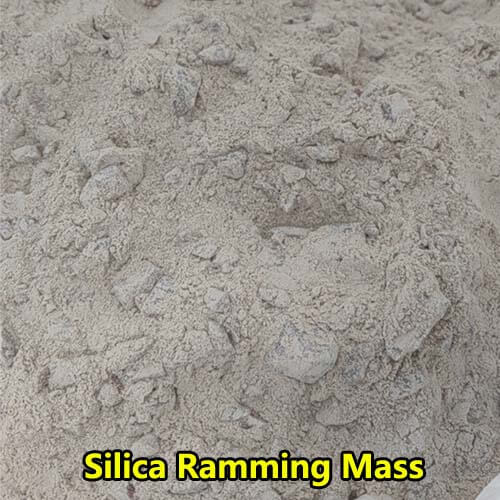
II. Application of the tamping material
Before construction, carefully check whether the molds and other construction tools meet the usage requirements, and whether the rust removal, wire mesh, and welding installation of the anchor nails are up to standard. Only after everything is ready can construction proceed according to the following methods.
- Mixing
① A forced mixer should be used. The mixer must be pre-cleaned and rinsed with water to ensure it is free of lime, mud, sand, silicate cement, and other impurities.
② The mixing quantity should be determined according to the mixer size and construction conditions. Each mixing batch should not exceed 100 kg.
③ Pour all components of the ramming mix into the mixer and dry mix for 3 minutes. Then add the recommended amount of liquid binder and wet mix for at least 5 minutes until the mix reaches a workable consistency.
④ The mixed ramming mix must be used within 15 minutes.
⑤ The partially set wet mix must be discarded and not reused after mixing with liquid binder.
⑥ The ambient temperature should be between 10 and 30℃. Appropriate measures should be taken when the material temperature and the ambient temperature are too low or too high.
- Application or Tamping
① During construction, use a wooden mallet or rubber mallet to tamp the lining material firmly. While applying or tamping, check the lining thickness frequently, ensuring uniform thickness and a smooth surface. Finally, smooth the surface with a trowel. Do not brush water, cement slurry, or sprinkle dry cement on the surface.
② For linings with a hexagonal mesh structure, the area filled with the mesh should not be too large at a time. Fill each hole completely and tamp firmly until the lining surface is flush with the mesh. During construction interruptions, clean any remaining material from the unfinished areas of the mesh.
③ Install expansion joints according to construction requirements, and fill the expansion joints with refractory fiber.
- Curing
① After construction, allow to cure naturally at room temperature for 3 days, and strictly prohibit watering.
② The ambient temperature for curing should ideally be above 20℃. If the ambient temperature is below 20℃, the curing time should be appropriately extended or other corresponding measures should be taken depending on the hardening progress.
- Baking
① Baking should be carried out according to the relevant temperature rise curve to avoid rapid heating, which may cause internal damage or cracking.
② When the curing temperature is too low, the low-temperature baking time should be extended and the heating rate slowed down.
③ Proper ventilation must be maintained during baking to facilitate moisture removal.
④ If the temperature drops during the baking process, do not accelerate the heating process to catch up.
III. Kiln Baking
During the kiln drying process, the principle of “slow heating and no turning back” should be followed, that is, slow heating without cooling, to prevent damage to the kiln lining and extend its service life.
During the kiln lining process, rotating the kiln body from intermittent to continuous operation and from low speed to normal speed can maintain the uniformity of the kiln lining surface temperature and prevent kiln body deformation.