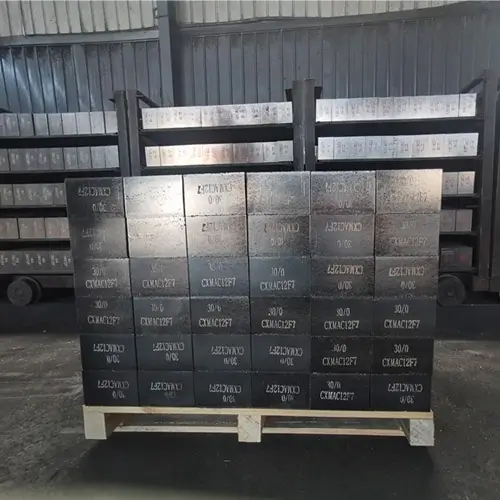
Magnesium carbon bricks are refractory materials composed of high-melting-point basic magnesium oxide (melting point 2800°C) and high-melting-point carbon materials resistant to slag penetration. Various non-oxide additives are incorporated and bonded using carbon-based binders. These bricks are primarily used in the linings of converters, AC electric arc furnaces, DC electric arc furnaces, and slag lines of ladles.
Typically, the melting loss of magnesia-carbon bricks occurs through the reaction between the magnesia on the working surface and the molten slag. The rate of melting loss depends not only on the properties of the magnesia itself but also on the size of the magnesia particles. Larger particles exhibit higher corrosion resistance but are also more likely to detach from the working surface of the magnesia-carbon brick and float into the molten slag. Once this occurs, it accelerates the rate of destruction of the magnesia-carbon brick.
The absolute expansion of large magnesia particles exceeds that of small particles. Combined with magnesia’s significantly higher expansion coefficient than graphite, this results in greater stress at the large magnesia particle/graphite interface compared to the small magnesia particle/graphite interface within MgO-C bricks. Consequently, larger cracks form at the former interface. This demonstrates that a smaller critical particle size of magnesia in MgO-C bricks mitigates thermal stress.
From a product performance perspective, a smaller critical particle size reduces open porosity and decreases pore size, enhancing oxidation resistance. However, it also increases internal friction between particles, complicates forming, and leads to lower density. Therefore, determining the critical magnesia particle size for MgO-C bricks in production is inherently challenging. Typically, the critical particle size of magnesia must be determined based on the specific operating conditions of the MgO-C brick. Generally, bricks used in areas with high temperature gradients and severe thermal shock require a smaller critical particle size, while those demanding high corrosion resistance require a larger critical particle size. To enhance the bulk density of the product, manufacturers with smaller forming equipment tonnage may opt for a slightly larger critical particle size.
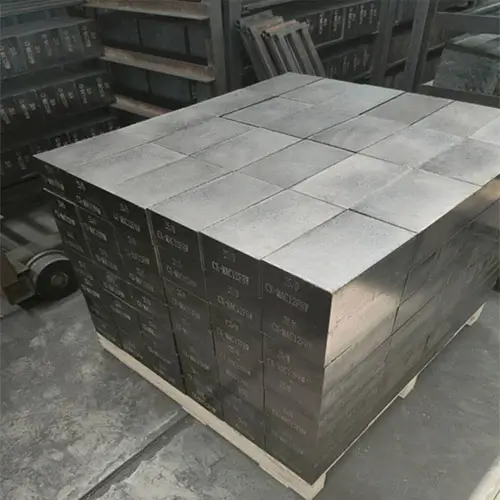
1. Fine magnesia powder
To ensure uniform thermal expansion between the particles and matrix in MgO-C bricks, a certain amount of fine magnesia powder must be incorporated into the matrix. This also helps maintain structural integrity after oxidation of the matrix.
However, if the magnesia powder is too fine, it accelerates the reduction rate of MgO, thereby hastening the deterioration of MgO-C bricks. Magnesia particles smaller than 0.01 mm readily react with graphite. Therefore, it is advisable to avoid incorporating such excessively fine magnesia during MgO-C brick production. To achieve high-performance MgO-C bricks, the ratio of magnesia particles smaller than 0.074 mm to graphite should be kept below 0.5. If this ratio exceeds 1, the porosity of the matrix will increase dramatically.
2. Graphite content
The graphite content should be determined in conjunction with the specific brick type and its intended application. Generally, if the graphite content is less than 10%, it is difficult to form a continuous carbon network within the product, thereby failing to effectively utilize the carbon’s potential. Conversely, a graphite content exceeding 20% complicates the forming process, increases the likelihood of cracking, and makes the product prone to oxidation. Therefore, the graphite content is typically maintained between 10% and 20%, with the specific amount selected based on the intended application. The melting loss of MgO-C bricks is governed by two processes: the oxidation of graphite and the dissolution of MgO into the slag. Increasing graphite content can reduce the rate of slag erosion but simultaneously increases damage caused by oxidation in both the gas and liquid phases.
3. Compounding
Graphite has low density and tends to float to the top of the mixture during mixing, preventing it from fully contacting other components in the formulation. High-speed mixers or planetary mixers are typically used. When producing MgO-C bricks, failure to observe the correct sequence of material addition during mixing will adversely affect the plasticity and formability of the slurry, thereby impacting the yield rate and service performance of the finished products.
The correct feeding sequence is: magnesia (coarse, medium) → binder → graphite → mixture of fine magnesia powder and additives. Mixing time varies slightly depending on the specific mixing equipment. Excessive mixing time may cause graphite and fine powder to detach from the magnesia particles, while the slurry dries out due to significant solvent evaporation from the binder. Insufficient mixing time results in an uneven mixture with poor plasticity, hindering proper forming.
4. Forming
Forming is a crucial method for enhancing packing density and achieving a compact microstructure in products. Therefore, high-pressure forming is required, strictly adhering to the operational procedure of applying light pressure first followed by heavy pressure in multiple stages. In MgO-C brick production, green density is commonly used to control the forming process. Generally, higher press tonnage yields higher green density while reducing the required binder quantity. Otherwise, the shortened particle spacing and thinner liquid film cause localized binder depletion, resulting in structural inconsistencies that compromise product performance and induce elastic aftereffects leading to green body cracking.
5. Hardening Treatment
Phenolic resin-bonded MgO-C bricks can undergo heat treatment at temperatures between 200 and 250°C. The resin cures either directly (thermosetting resin) or indirectly (thermoplastic resin), imparting high strength to the product. The typical treatment duration is 24 to 32 hours, including: Maintain temperature at 100–110°C to allow significant solvent evaporation; Maintain temperature at 200–250°C to facilitate binder condensation and curing.