
In recent years, with the development of the market economy and social progress, enterprises have faced persistently high raw material and labor costs, making the development and production operations of the refractory materials industry increasingly difficult. Compounded by the growing scarcity of refractory resources, there is a stronger emphasis on conserving raw materials and reducing refractory consumption. For refractory enterprises to thrive, adjustments and optimizations must be made across multiple fronts, with particular emphasis on controlling refractory consumption and reducing costs. However, the refractory industry exhibits significant deficiencies in production cost control, primarily manifested in: ① Production and usage methods remain relatively traditional, relying heavily on experience for control, with suboptimal results. ② Cost control analysis can only be conducted post-product use through technical indicators and material consumption statistics, making timely and effective control difficult. Therefore, achieving preemptive control over refractory consumption is essential to enhance a company’s competitive advantage and secure a favorable development outlook.
Part 1.The importance of overlaying the working layer in ladle casting refractories
Although refractory materials for ladle linings in steelmaking hold promising prospects within the refractory industry, the substantial consumption of these materials in ladle applications significantly increases production costs for enterprises. To further reduce production expenses, it is essential to enhance management of ladle refractories, control raw material consumption, and adopt standardized, scientific management practices for the layered casting of ladle working layers, thereby maximizing the economic benefits of refractory materials.
After the working layer of a ladle lining is used, completely removing all residual material from the ladle wall would result in waste of refractory materials and increase ladle costs. Therefore, by surface-treating the residual castable on the wall, the existing material can be effectively utilized for subsequent overlay casting of a new working layer. The amount of original refractory material retained during removal directly corresponds to the amount saved in usage, thereby reducing the consumption of ladle refractories and ultimately achieving cost reduction.
Part 2.Process technology for ladle lining casting
1. Surface preparation techniques for working layers prior to overlay pouring
When the number of overpours on the ladle’s working layer reaches six times, the permanent layer refractory lining typically exhibits severe crumbling, discoloration, and deterioration, with significant steel inclusions within the lining. Continuing overpours at this stage poses safety hazards to the ladle. It is generally stipulated that ladle overpours should not exceed six times, and overpours are prohibited when the permanent layer damage exceeds 50%. Prior to overlaying, thoroughly clean the ladle working layer surface and interlayers of slag and adhered steel. Any sections protruding above the original layer must be removed. Areas with severe deformation of the ladle shell require complete removal of the castable material. The permanent layer after removal must not interfere with the positioning of the mold during overlaying.
For ladles with a residual working layer thickness ≥180mm, since the existing layer thickness meets operational requirements, only the original brick platform needs to be removed by 200mm to fully utilize the new refractory. Thoroughly clean slag deposits and adhered steel from the ladle’s working layer surface and interlayer. Overpouring is only required for the slag line brick platform on the ladle wall. For ladles with a working layer thickness <180mm, a full overlay is required. The entire sintered layer must be removed. To minimize material consumption, retain as much of the original castable as possible. If the retained original castable thickness is <180mm, the vibrator can freely move up and down during overlaying.
Before performing the sleeve pouring on a ladle, to ensure the quality of the sleeve pouring, it is essential to measure the residual length of the vent brick seat in the ladle. Verify that the residual length of the vent brick seat is ≥150mm, with no surface cracks exceeding 2mm in width and no pits deeper than 10mm. Practical experience indicates that when the residual length of the seat brick is ≥150mm and the surface has no cracks larger than 2mm or pits deeper than 10mm, the service life of the installed vent brick is approximately 5 times lower than the average standard, and there are safety and quality risks. Therefore, if the above standards are not met or the seat brick has poor integrity, it must be removed and replaced. After inspection confirmation, thoroughly clean residual steel and slag from the surface and central bore of the ladle vent brick seat. Then install the vent brick according to the installation procedure to ensure it meets the required specifications.
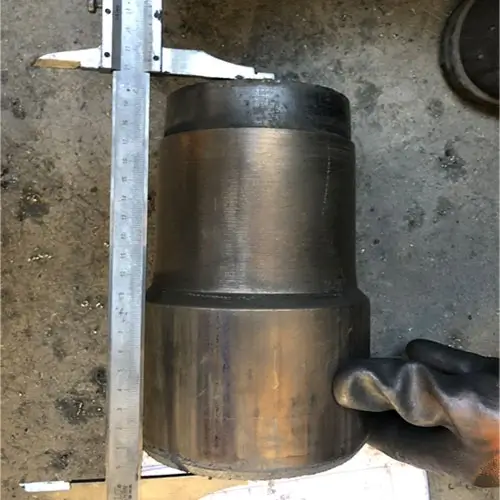
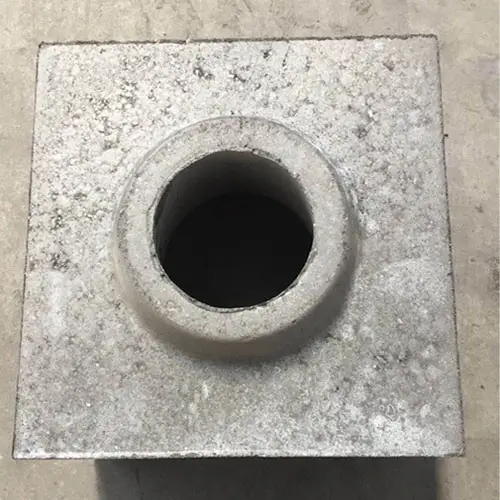
Thoroughly clean residual molten steel and slag from the surface and interior of the ladle nozzle seat bricks. Inspect and confirm the seat bricks are free of cracks, with the remaining length of the upper seat brick ≥100mm. Before performing the overlay pouring, install and secure the specially shaped nozzle wooden core. Use the nozzle wooden core to repair the nozzle seat bricks. The wooden core must be installed straight and clamped tightly to prevent it from falling out or tilting during overlay pouring, which could compromise installation quality. When the remaining length is less than 100mm or the nozzle seat brick exhibits poor integrity, it is impossible to continue installing the nozzle brick on the slide plate. The nozzle seat brick must be removed and replaced with a new one.
2. Ladle bottom working layer overlay pouring technique
The quality of mixing the refractory castable used for ladle lining requires high standards. During mixing operations, start the mixer first before adding materials. Strictly adhere to the mixer’s rated power when adding the castable. After adding materials, dry mix for 1-2 minutes to ensure uniform blending of the ladle castable. Then, based on the actual condition of the castable, add water to maintain the water content within ±7%. Mix for 2-3 minutes to fully incorporate the water into the castable, achieving optimal quality. Water content significantly impacts the refractory’s performance. Insufficient water reduces room-temperature compressive strength below 20MPa, while excessive water causes segregation, diminishing erosion resistance.
After thoroughly mixing the castable according to the required quantity, evenly distribute it onto the ladle bottom. Activate the vibrator during placement, requiring two operators to simultaneously pull the vibrator in opposite directions throughout the process. Cease vibration once no bubbles appear on the surface to ensure adequate bonding strength. The mixed castable must be placed and vibrated within 30 minutes. The thickness of the ladle bottom lining shall comply with the ladle production process standards, typically level with the permeable bricks used. During lining installation, ensure the bottom surface is flat, vibration is uniform, no honeycombing occurs, and the top surface is free of debris. Allow the surface to rest for 30–40 minutes until initial setting occurs. Once the initial setting strength is achieved, install the pouring mold.
3.Ladle Lining Casting Technology for the Working Layer
Lower the working layer mold into the ladle and position it level and straight. Since the ladle and mold are designed for matched use, the placement deviation of the mold must be controlled within 10mm. After the mold is seated, immediately secure it with the locking rod to prevent displacement during pouring vibration. When lining only the ladle wall, seal any gaps between the mold and the original ladle wall with asbestos felt or similar materials to prevent material leakage during vibration.
The refractory material for overlaying the ladle wall must exhibit excellent flowability. After proper mixing, move the mixer to the ladle’s location and uniformly discharge the material between the ladle’s residual lining and the mold. Simultaneously activate the vibrator to vibrate continuously during discharge. This prevents voids within the vibrated refractory material, ensuring full integration between the overlay and the original lining. Cementing should cease once the lining reaches the specified height. The overlay must be thoroughly compacted without voids, honeycombing, or pitting. The surface should be leveled by vibration, free of water accumulation or unevenness.
Part 3.Implementation of the Lining Layer Pouring Effect on Ladle Walls
Through practical implementation, the average refractory consumption during the overall lining of 10 ladle working layers was statistically compared with the average consumption during the first three overlay pours of the same 10 working layers. Statistical analysis reveals that after adopting the ladle wall overlay pouring process, the average refractory consumption per ladle decreased by 5.5 tons during construction.
Part 4.Comparative Analysis of Performance Metrics for Lining Layer Casting Methods in Ladle Walls: Segmented Casting vs. Monolithic Casting
From January to December 2015, 375 ladles were used. Statistics were compiled separately for the overall casting ladle indicators and the working layer overlay casting ladle indicators. In the first quarter, the average difference between overlay ladles and monolithic ladles was 0.4 ladles; in the second quarter, it was 0.64 ladles; in the third quarter, it was 0.8 ladles; and in the fourth quarter, it was 1.2 ladles. The annual average difference between all overlay ladles and all monolithic ladles was 0.775 ladles. Since the difference was less than one ladle, it is evident that overlaying ladles has minimal impact on the working layer usage and meets operational requirements.
Through practical application on refined ladles, the technique of layered pouring for ladle lining materials maximizes the effective utilization of refractories. This approach does not compromise the overall technical specifications of the ladle while significantly reducing refractory consumption. By lowering labor intensity for workers, it achieves the goal of reducing raw material consumption, yielding favorable economic and social benefits.