Operations at an intermediate-frequency (IF) furnace site involve the use of diverse equipment and entail the simultaneous, overlapping work of multiple trades; consequently, the environment is prone to sudden accidents and presents significant production hazards. It is therefore imperative to continuously increase investment in safety measures for IF furnace operations to ensure equipment integrity. Furthermore, it is essential to elevate the standard of safety management for IF furnace production and to train employees to identify potential hazards across various processes—including equipment operation, smelting, process control, casting, and crane operations—thereby enabling them to swiftly implement emergency response measures in the event of a malfunction, contain the escalation of accidents, and ultimately safeguard the safety of IF furnace production.
In the foundry industry, the induction furnace (the smelting stage) constitutes a major “hazard source,” as it involves the simultaneous and indispensable presence of water, fire, and electricity. Moreover, given the absence of any safety clearance between these three elements, safety precautions for production must be implemented with 100% effectiveness—a challenging task, yet one that is achievable. The legal representative of the enterprise bears primary responsibility for production safety; they determine how safety initiatives are to be conducted, and they must ensure that adequate financial support is provided to address any “obstacles” or difficulties encountered in safety management.
Significant funds have been invested in safety upgrades. For instance, the furnace induction coils—which were prone to complete failure due to electrical breakdown caused by thin walls—have been replaced with thick-walled coils measuring at least 4 mm. Furthermore, the medium-frequency furnaces—originally equipped with a dual-redundancy hydraulic tilting system and twin control consoles (located both at the furnace front and inside the control room) to ensure safe operation—were subsequently retrofitted with an electric remote-control system. This modification allows operators to control the furnace from a safe distance, away from the furnace platform and hazardous zones, thereby significantly enhancing worker safety.
I. Emergency Response Plan for Furnace Leaks and Burn-Throughs
Common accidents involving the furnace body of a medium-frequency induction furnace include leaks and burn-throughs. If such an incident occurs and no remedial measures are taken, it can lead to the rupture of the coil’s copper tubing; the subsequent contact between molten iron and cooling fluid may trigger an explosion, potentially resulting in major equipment failure or casualties. Therefore, this document provides a detailed explanation of the potential causes of such accidents, the necessary preventive measures, and the emergency response protocols to be implemented in the event of an incident.
1.Causes of Furnace Leakage and Burn-through Accidents:
1) If the molten iron cools for an excessive period, a solidified crust may form on the surface. Upon subsequent reheating, this crust expands, exerting compressive force on the furnace lining; this pressure can induce cracks in the lining. During the melting process, the molten iron may then penetrate through these cracks, resulting in a furnace breakout, or erupt through the solidified crust, leading to a furnace eruption accident.
2) As the furnace ages, the internal volume of the lining increases, leading to a larger volume of molten iron contained within the furnace while the lining itself becomes thinner. Consequently, specific areas of the lining may be unable to withstand the pressure exerted by the molten iron, resulting in a furnace breakout.
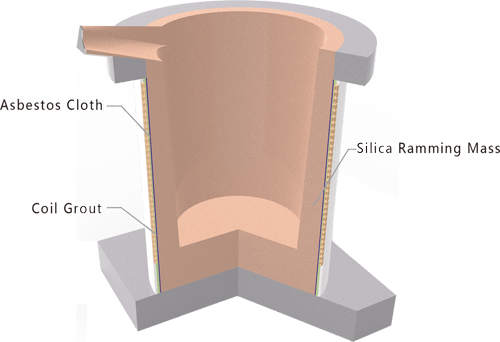
3) During the ramming of the furnace lining, certain areas may fail to meet the required density specifications, or localized impurities may be inadvertently introduced and go undetected. During the subsequent smelting process, the molten iron may then penetrate through these structural defects.
4) Rapid cooling of the furnace lining can induce cracking; during the smelting process, the molten iron may subsequently penetrate through these cracks.
2.Preventive Measures
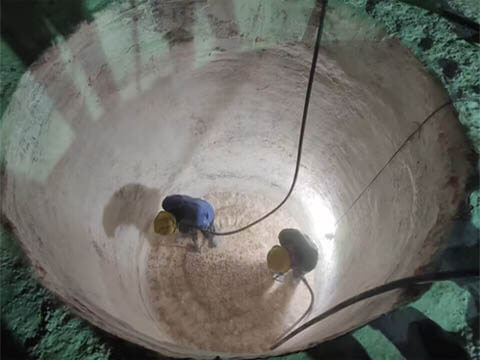
1) From the commencement of furnace construction, a designated individual must exercise strict oversight to ensure uniform ramming consistency throughout the entire furnace lining. The ingress of any foreign objects into the lining during the ramming process is strictly prohibited.
2) Prior to each charging operation, the furnace lining must be inspected for any defects—such as cracks or perforations—that could potentially lead to a furnace breakout. Should any such issues be detected, immediate remedial action is mandatory.
3) In the event that smelting operations are interrupted for an extended period due to equipment malfunction or other factors, the molten iron must be tapped from the furnace to prevent the formation of a solidified crust.
If the clean water pump fails to operate—resulting in a cessation of the production water supply—the valve for the auxiliary pump should be opened to allow water to flow into the furnace body via gravity feed. However, the pump room valve must be partially throttled down to ensure a controlled flow rate through the furnace body; subsequently, the intake valve for the main well’s low-level water supply should be opened.
II. Contingency Plan for Clear Water Pump Supply Failures
During the smelting process, should the furnace body’s cooling water circulation be disrupted due to a malfunction of the clean water pump or a general water supply interruption, the following measures must be implemented:
- In the event of a sudden power outage rendering the clean water pump inoperable: Immediately halt the smelting operation. Open the emergency valve to supply the furnace body with industrial process water. Once the water pressure has been properly regulated, resume normal smelting operations.
- Water Supply Pumps (Uplift Pumps) #1 and #2 serve as mutual backups: If Pump #1 is damaged or malfunctions—rendering it unable to operate normally—close its associated valves and cut off its power supply. Open the valves for Pump #2; after filling the pipeline with water and purging the air, switch on the power for Pump #2 to restore the water supply. Conversely, if Pump #2 malfunctions, switch over to Pump #1 to restore the water supply, and report the incident to the workshop supervisor.
- Water Drainage Pumps (Down-pumps) #3 and #4 serve as mutual backups: If either pump is damaged, the smelting operation must be halted. If Pump #3 is damaged, open the water valve for Pump #4, then close the water valve for Pump #3; subsequently, cut off the power to Pump #3 and switch on the power for Pump #4. Conversely, if Pump #4 malfunctions, switch over to Pump #3 to maintain water drainage. Once the water drainage system is functioning normally again, resume the smelting operation.
- If the cooling water temperature becomes excessively high (exceeding 55°C): To lower the water temperature, the following procedure should be executed while the furnace is shut down or the smelting process is temporarily halted: Stop the water supply pump. Allow the water level in the “large well” (main reservoir) to drop to a point where it begins to overflow into the “small well” (auxiliary reservoir). Then, restart the water supply pump, using industrial process water to replenish the small well and pump it back up into the large well. Once the water temperature has been sufficiently reduced, resume normal smelting operations.
III. Emergency Response Plan for Sudden Water Supply Interruption During Intermediate-Frequency Furnace Operations
In the event of a production water supply interruption caused by a fault in the water lines or other factors, priority must be given to monitoring the water inlet of the intermediate-frequency (IF) furnace control cabinet. Water should be supplied to the IF control cabinet via the drainage pipeline pump. Furthermore, during the melting process, the cooling water temperature must be monitored frequently; melting operations may continue provided that the cooling water temperature for both the furnace body and the control cabinet does not exceed 55°C. The specific implementation measures are as follows:
- If the overall circulating water temperature has already exceeded 55°C when a water supply interruption occurs during the melting process, the furnace power supply must be immediately shut down. The situation must then be reported to the relevant workshop supervisor for coordinated resolution.
- If the water temperature does not exceed 55°C when a water supply interruption occurs during the melting process, melting operations may continue. Once the current heat has been tapped (the furnace has been emptied), the water temperature should be monitored for any changes, after which the situation must be reported to the relevant workshop supervisor for coordinated resolution.
IV. Emergency Plan for Power Outages in Medium-Frequency Furnaces
In the event of a sudden power outage at an intermediate-frequency furnace—rendering the furnace inoperable—the primary priority is to ensure a continuous water supply to the furnace body, thereby protecting the induction coils from damage. Consequently, the following courses of action are available:
- If the pumps in the clean water pump house remain operational, adjust the pumps to achieve a hydraulic balance between the upper and lower reservoirs, ensuring that neither the large nor the small reservoir overflows, and that the small reservoir does not run dry.
- If the clean water pumps are non-operational, utilize the emergency valves to supply water to the furnace body. Upon opening the emergency valves, the valves for the downstream pumps must be closed to ensure that the water level in the large reservoir does not drop.
- Emergency Response Plan:
1) If signs of a furnace breach or leak are detected—particularly if the leak point is located relatively high on the furnace body—immediately cut off the power supply. Do not shut off the cooling water supply. Proceed with an emergency tap-out to drain the molten metal; once the molten metal has been completely discharged, inspect the location of the breach.
2) If signs of a furnace breach are pronounced and the volume of the leak is substantial—posing a risk of severe damage to the equipment—steps must be taken to minimize equipment loss. Immediately cut off the power supply, tilt the furnace to discharge the molten metal into the furnace pit, and cover the molten metal with dry sand to prevent thermal damage to the furnace body.
3) In the event of an emergency furnace breach or leak, the primary priority is the safety of personnel, followed by the safety of the equipment. Regarding the furnace body itself, the main priority is to protect the induction coils; therefore, it is strictly prohibited to shut off the cooling water supply. Finally, protect other components and systems, striving to minimize overall losses to the greatest extent possible.
4) If a furnace breach or leak occurs—or if signs of such an event are detected—and the power supply has not yet been interrupted, immediately cut off the power to protect the thyristor inverter tubes and rectifier tubes.