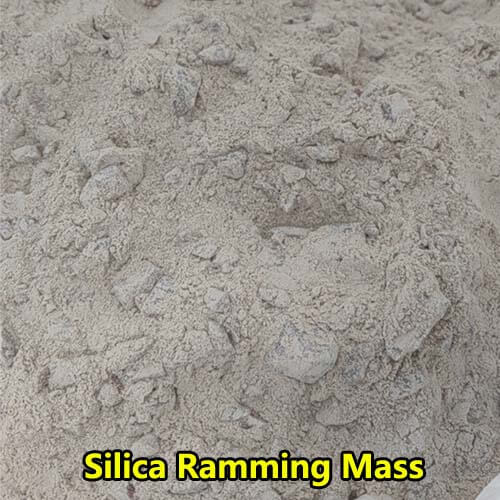
Pressurized fluidized bed coal gasification technology is a new generation of large-scale, advanced coal gasification technology that has emerged in recent years alongside the rise of clean coal technology. The high-temperature, high-pressure nature of coal gasification reactions typically requires the installation of a refractory lining inside the gasifier. The gasifier structure is generally divided into three layers: the innermost layer consists of refractory material that comes into direct contact with the high-temperature medium; the middle layer consists of thermal insulation material; and the outermost layer consists of a stainless steel shell. In addition to key technologies such as reactor structure and auxiliary equipment, the selection and curing of the reactor lining materials are also critical factors determining the success of the process, given the demands of temperature, pressure, and other reaction conditions. The service life of the refractory lining has a significant impact on the long-term stable operation of the gasifier.
Due to the wide variety of coal types used in gasification processes, each with varying qualities, the reaction conditions within fluidized bed gasifiers are complex. These conditions are typically accompanied by atmospheric corrosion involving high-temperature oxidation, sulfidation, hydrogenation, carbonation, and chlorination. Additionally, for processes involving high-alkali coal types or the addition of alkali metal catalysts, alkali corrosion may also occur. Such corrosion severely impacts the service life of refractory materials and adversely affects the safe and stable operation of high-temperature equipment. The occurrence of corrosion within gasifiers has made the selection and service life of refractory materials a major concern.
Types of Refractory Materials and Failure Mechanisms
Refractory materials are classified according to various criteria. Specifically, they can be categorized by chemical properties into alkaline, neutral, and acidic refractories; by form of supply into shaped and unshaped refractories; by firing status into fired and unfired refractories; and by chemical composition into silica-based, aluminosilicate, magnesia-based, and carbon-composite refractories, among others.
The complexity and harshness of operating conditions for refractory materials dictate that different performance requirements must be imposed based on the specific environment, including resistance to thermal damage, thermal stress failure, and corrosion by environmental media. Since there are significant differences in the physical and chemical properties of various refractory materials, the appropriate material should be selected based on the characteristics of the reactor, the operating environment, and the specific application. For circulating fluidized bed gasifiers, damage to the lining refractories is primarily categorized into three types: chemical erosion, thermal erosion, and mechanical erosion. Chemical erosion leads to a reduction in the structural performance of the refractory materials, thereby amplifying the impact of thermodynamic and mechanical erosion on the material’s wear resistance.
Material selection must fully account for process characteristics. Key physical and chemical parameters to consider during material selection typically include compressive and flexural strength, abrasion resistance, thermal shock stability, and linear shrinkage upon re-firing. If the selected material—such as castable refractory—does not reach the required sintering temperature under operating conditions, its strength will be significantly reduced. It is therefore essential to ensure that the selected refractory possesses adequate strength at the operating temperature, or that it is heated to its sintering temperature during the initial furnace drying phase to ensure high strength during operation. Additionally, improper handling during the fabrication, installation, and drying processes can also lead to damage to the refractory. Therefore, it is essential to ensure that the contractor strictly adheres to design specifications during fabrication and installation, while also ensuring that the entire process complies with the material installation requirements specified by the refractory manufacturer. It is crucial to ensure that all moisture contained in the material is completely converted into water vapor and released, thereby preventing the vapor pressure within the refractory from exceeding the material’s tensile strength after furnace ignition. This prevents delamination and collapse of the lining, which could lead to the collapse of the furnace lining.
Research on fluidized bed reactors and alkali-resistant corrosion-resistant refractory materials
2.1 Current Status of Refractory Materials for Fluidized Bed Reactors
Refractory linings for fluidized bed reactors can generally be classified into three categories according to their function: wear-resistant materials; refractory materials; and thermal insulation materials. Existing refractory materials used in fluidized bed reactors include: phosphate refractories; silicon carbide refractories; corundum refractories; and silicon nitride-bonded silicon carbide products, etc.
Phosphate bricks are suitable for temperature ranges of 1200–1600℃. They are unfired bricks obtained through low-temperature heat treatment at 500℃ and have been used in cement kilns for many years. Early circulating fluidized bed boiler linings also used this material. However, within the operating temperature range of circulating fluidized bed boilers (850–900℃), phosphate refractories exhibit unstable performance and poor wear resistance. Despite this, their price advantage led to their early widespread use in fluidized beds.
Silicon carbide refractories possess excellent wear resistance and thermal shock resistance. However, their use is limited in coal gasification processes due to the slightly oxidizing atmosphere within the reactor. The report points out that the United States strictly prohibits the use of silicon carbide refractories in circulating fluidized bed boilers, and the high cost also limits their use.
Aluminosilicate refractories (Al₂O₃-SiO₂ system) have a basic chemical composition of Al₂O₃ and SiO₂. Mullite and corundum refractories are commonly used in this system. Mullite is an ideal high-grade refractory material due to its high refractoriness, creep resistance, good chemical resistance, high load softening temperature, good thermal shock resistance, good volume stability, and strong electrical insulation. However, the chemical composition of mullite is unstable, including two forms: 2Al₂O₃·SiO₂ and 3Al₂O₃·2SiO₂. In corundum refractories, the Al₂O₃ content is higher than 90%, and the main crystalline phase is α-Al₂O₃.
Corundum possesses high thermodynamic strength, good chemical stability, excellent thermal shock resistance and abrasion resistance, and strong resistance to reducing agents, making it an important raw material for advanced refractory materials.
Considering the above material properties and price, corundum is typically chosen as the lining refractory material for coal gasification furnaces. Commonly used varieties include white corundum, high-alumina corundum, and brown corundum. For coal gasification furnaces, different refractory compositions and design structures result in varying resistance to coal ash erosion in the refractory lining. The erosion mechanism of coal ash on refractory materials is the process of reaction and erosion between coal ash minerals and the refractory material. Studies show that coal ash has the strongest erosion effect on high-alumina refractories, followed by silicon carbide refractories, while corundum refractories have the strongest erosion resistance.
2.2 Study on the Alkali Corrosion Resistance of Different Refractory Materials
Among the various atmospheres of corrosion in gasification furnaces, alkali erosion has a particularly strong destructive effect on refractory linings. Alkali metals evaporate and condense within the furnace, reaching the refractory brick lining, especially in the gaps, where they accumulate and permeate, leading to corrosion and cracking of the lining and damage to the refractory inner lining.
Currently, extensive research has been conducted both domestically and internationally on the corrosion of refractory materials by alkali metals. Blast furnace engineers have developed national standards for testing the alkali resistance of refractory materials, aiming for low porosity and high alkali resistance, and have developed microporous products. Corrosion behavior of silica-alumina refractories under carbothermic reduction conditions has been studied, revealing that high-alumina bricks exhibit the best corrosion resistance, and that the addition of alkali metals exacerbates refractory erosion, with increased additive dosage intensifying the corrosion.
Alkali-containing substances can cause damage to refractories with high alumina content, leading to “alkali cracking.” Furthermore, alkali-containing substances can form binders that further damage the refractory material, particularly easily forming sulfur-alkali compounds, which damage the refractory’s bonding structure. Research indicates that alkali corrosion below 900℃ is initiated by a direct reaction between the refractory material and alkali-containing substances, while high-temperature corrosion is caused by the reduction of potassium compounds into potassium vapor, followed by a migration oxidation reaction.
Commonly used refractory materials in alkaline conditions
The following is a detailed introduction to the alkali corrosion resistance of commonly used refractory materials under alkali conditions:
(1) Aluminosilicate Refractory Materials
The basic chemical composition of Al₂O₃-SiO₂ refractory materials is alumina and silicon dioxide. The composition varies depending on the alumina content.
Using Al₂O₃-SiO₂ refractory materials, the chemical reactions with alkali compounds are as follows:
A₃S₂ + 16SiO₂ + 3K₂O → 3KAS₆ (orthoclase)
A₃S₂ + 10SiO₂ + 3K₂O → 3KAS₄ (leucite)
2A₃S₂ + 8SiO₂ + 6K₂O → 6KA S₆ (Potassium Nepheline)
11Al₂O₃ + K₂O + Na₂O → (K·Na)Al₁₁ (β-Corundum)
K₂SO₄·2CaSO₄ + H₂O → 2CaSO₄·K₂SO₄·H₂O (Potassium Gypsum)
2CaSO₄ + K₂SO₄ → 2CaSO₄·K₂SO₄ (Anhydrous Potassium Gypsum)
Alkali metals corrode Al₂O₃-SiO₂ refractories because they form leucite, nepheline, and β-corundum, which cause the refractory lining to expand in volume, ultimately leading to alkali cracking. The reaction products depend on the alkali concentration and the content of Al₂O₃ and SiO₂ in the refractory material. The degree of expansion and damage caused by alkali metals varies among different types of aluminosilicate refractories.
High-alumina bricks (mullite composition) have the worst resistance, exhibiting the most severe expansion and damage. Alkali metals react with mullite at 700–110℃ to form nepheline; the formation of the alkali-containing phase results in a 20%–25% volume expansion, leading to material failure.
Corundum refractories show better resistance to alkali metals and exhibit minimal volume change. The mechanism of alkali corrosion is as follows: grain boundary substances react with alkali-containing materials to produce new substances, which undergo a certain volume expansion, leading to the fragmentation of the corundum refractory specimen. This is essentially the process of K₂O and Al₂O₃ forming a solid solution of potassium under certain temperature and pressure. The chemical reaction is as follows: 1/11 K₂O(S) + Al₂O₃(S) → 1/11 (K₂O·Al₂O₃)(S)
Furthermore, the corrosion performance of alkali metals on refractory materials is affected by the specific reaction temperature, atmosphere, reaction time, and the form in which the alkali metal exists. When selecting refractory materials for gasifier linings for different gasification processes, different refractory materials should be selected based on their own process characteristics, the location of use within the gasifier, specific reaction process conditions (atmosphere, temperature, etc.), and the form of potassium. However, under high temperature and high alkali metal concentrations, there are no absolutely alkali-resistant aluminosilicate refractory materials. Therefore, for blast furnaces with severe alkali metal accumulation, high-alumina linings should not be used in the lower part. In addition, porosity is one of the key factors affecting the alkali metal resistance of refractory materials.
(2) Chromium-containing Refractory Materials
Magnesium-chromium and chromium-corundum refractories have high refractoriness, high high-temperature strength, and excellent thermal shock resistance. Due to their good alkali resistance and excellent high-temperature resistance, magnesia-chromium refractories have long been used as lining materials for alkali recovery furnaces. In chromium-containing refractories, Cr₂O₃, especially in the matrix, helps increase material density and hot-state bonding strength, reduce porosity, and improve slag erosion resistance. However, Cr₂O₃ readily reacts with alkali metal oxides (K₂O, Na₂O) under an oxidizing atmosphere to form low-melting-point hexavalent chromates, as shown in the following reaction formula:
2(Cr₂O₃) + O₂ + R₂O → 4(R₂CrO₄)(R-K, Na, etc.)
This reaction not only destroys the structure of Cr₂O₃ and chromate, but the resulting low-melting-point substances can also seep into the brick. Furthermore, chromate R₂CrO₄ is a weak oxidizing compound with high chemical stability, while hexavalent chromium is toxic and carcinogenic. Numerous studies have shown that some human skin ulcers and respiratory diseases are related to Cr₆⁺, and the environmental pollution it causes is persistent. With increasing environmental awareness, addressing “chromium pollution” has been placed on the agenda.
(3) Calcium Aluminate-Based Refractory Materials
The CaO-Al₂O₃ binary system includes two important compounds: calcium dialuminate and calcium hexaaluminate. Due to their excellent water hardening ability, decarburization ability, and high-temperature performance, they are widely used in building materials, metallurgy, and defense industries.
Calcium hexaaluminate (CaAl₁₂O₁₉ or CaO·6Al₂O₃, abbreviated as CA₆, mineral name: black aluminum calcium stone) has attracted much attention in recent years due to its superior physicochemical properties. In the CaO-Al₂O₃ binary system, it exhibits the best resistance to hydration and has a high melting point (maximum approximately 1830℃).
CA₆ crystals grow anisotropically, forming hexagonal plate-like crystal morphology. This crystal form has a microporous structure and can inhibit sintering within a certain temperature range, maintaining the apparent porosity of the material essentially unchanged and reducing the thermal conductivity. It is worth mentioning that CA₆ and Al₂O₃ have excellent compatibility. Because their average coefficients of thermal expansion are very similar, they can be mixed in any ratio without causing expansion mismatch. Furthermore, due to CA₆’s high melting point, it exhibits good stability under high-temperature reducing atmospheres and good corrosion resistance in alkaline environments. Calcium hexaaluminate materials have excellent development prospects.
Under high-temperature conditions, both corundum and CA₆ react with K₂O. Corundum reacts with potassium oxide to form β-corundum, accompanied by significant volume expansion, which is one of the main causes of refractory lining damage. However, the crystal structure of CA₆ is similar to that of β-Al₂O₃. When Ca2+ is embedded in layered alumina, it can absorb alkali metal ions between the layers without significant volume change. In addition, the bulk density of CA₆ (3.38 g/cm³) is similar to that of KA11 (3.37 g/cm³), so when CA₆ is corroded by alkali, its volume stability is higher than that of other refractory materials.
(4) Magnesium Aluminum Spinel Refractories
Magnesium aluminum spinel (MgO·Al₂O₃ or MgAl₂O₄, abbreviated as MA) is the only stable compound in the MgO-Al₂O₃ binary system. MA has an isotropic octahedral structure, with Al-O and Mg-O bonds bonded by ionic bonds. These electrostatic bonds have equal strength, resulting in a stable structure. This crystal structure ensures excellent thermal shock resistance and wear resistance in MA refractories. Furthermore, it exhibits good resistance to free SO₂/SO₃ and K₂O/Na₂O under redox atmospheres. Therefore, MA is widely used in the refractory materials industry. In addition, MA has a high melting point (2135℃), low thermal conductivity, low coefficient of thermal expansion, high strength, high hardness, strong impact resistance, strong resistance to alkali corrosion, and is also very stable against iron oxides.
(5) Composite Materials
Given that both CA₆ and MA possess good resistance to alkali corrosion, and that their coefficients of thermal expansion are similar and their compatibility is good, allowing for arbitrary proportion mixing without expansion mismatch issues, the composite use of these two materials can be considered. CA₆-MA composite lightweight aggregates have been developed, and research indicates they exhibit good thermal shock stability, erosion resistance, wear resistance, and slag erosion resistance.
(6) Alumina-Carbon Refractories
Alumina-carbon refractories are widely used in blast furnaces, particularly in iron pretreatment furnaces and molten reduction furnaces where alkali corrosion is present. Among these, SiAlON (silicon carbide) combined with corundum has become a key refractory material in large blast furnaces. Under a reducing atmosphere, blast furnace slag rich in alkali metals exhibits a relatively low erosion rate on SiAlON-bonded corundum bricks. The erosion mechanism involves the reaction of SiAlON with alkali vapor to form potassium nepheline, which participates in the formation of the silicate glass phase. Corundum particles react with ferrous oxide, sodium oxide, and potassium oxide in the ash to form iron-aluminum spinel and a small amount of needle-like β-alumina.
However, when SiC is used under oxidizing conditions, it oxidizes to SiO₂, generating alkali silicates and producing a high-temperature binder phase. This phase reacts synchronously with the surface layer, easily forming a slag-laden layer. While this may slow down the alkali corrosion process, the presence of this high-temperature binder phase also adheres to refractory materials and ash, potentially leading to the further formation of nepheline and other low-temperature eutectics, causing matrix embrittlement and damage.
Recommendations for refractory linings of fluidized bed gasifiers
(1) Considering the high temperature, strong corrosiveness, and severe erosion of the gasifier lining by the internal material flow within the fluidized bed gasifier, the gasifier lining must possess erosion resistance, corrosion resistance, thermal shock resistance, and a certain degree of thermal volume stability. Furthermore, future selection of refractory linings for coal gasifiers will place greater emphasis on economic and environmental friendliness, while also requiring ease of construction, longer service life, and easy repair.
(2) For industrial-scale gasifiers, the selection of suitable refractory linings must consider the specific process characteristics and the properties of the raw materials used, paying close attention to their physicochemical properties, such as compressive strength, flexural strength, abrasion resistance, corrosion resistance, and thermal shock stability. Whether these properties meet the standards will significantly impact the long-term stable operation of the gasifier. It is recommended to establish relevant testing standards to comprehensively test the performance of refractory materials, and to have relevant technical personnel and experienced experts evaluate the tests to ensure that the relevant physicochemical indicators meet the process design requirements. Additionally, the qualifications and capabilities of the selected production and construction companies also significantly affect the performance and service life of the gasifier refractory lining.
(3) The gasifier should be baked and cooled in strict accordance with the heating and cooling curves that meet the performance requirements of the refractory material. Emergency shutdowns should be avoided as much as possible during operation to reduce the number of start-ups and shutdowns and prevent stress fatigue of the refractory material, which could lead to cracking of the lining. In addition, regular maintenance should be arranged, and cracks should be repaired in a timely manner.