
Carbon-based refractories are a new type of refractory material developed in the late 1970s. Utilizing the high refractoriness and non-wetting properties of graphite, they significantly improve the high-temperature performance and erosion resistance of refractory materials. They possess excellent thermal shock stability, slag erosion resistance, spalling resistance, and high-temperature creep resistance. Alumina-magnesia-carbon bricks are carbon-based refractories with Al2O3 as the matrix. They are made primarily from high-quality high-alumina bauxite clinker, with the addition of appropriate amounts of high-purity magnesia, flake graphite, and binders, and are produced through heat treatment at 200-300℃.
Magnesia-carbon bricks are unburned or lightly burned basic bricks made from carbon materials and magnesia using carbonaceous binders. After initial successful research in Japan, they were first used in hot spots of high- and ultra-high-power electric arc furnaces and in the gas supply nozzles of bottom-blown converters. Later, Japan applied magnesia-carbon bricks to various parts of converters. Compared to tar-impregnated and fired magnesia-dolomite bricks, the converter life is increased by approximately 1.3 to 1.6 times. Magnesia-carbon bricks, while retaining the advantages of basic refractories, possess additional advantages due to the introduction of carbonaceous binders, including high refractoriness, strong slag resistance, low thermal expansion coefficient, and high thermal conductivity. This significantly improves the performance of basic refractories and completely overcomes their shortcomings, such as poor spalling resistance and easy slag absorption.
The following are examples of how the main raw materials of alumina-magnesia-carbon bricks affect the finished product:
Premium Bauxite Clinker
The main mineral components of high-alumina bauxite raw materials in my country are diaspore and kaolinite. Bauxite clinker is a product of high-temperature calcination. The Al2O3 content of premium-grade bauxite clinker is above 88.2%, and can reach up to 91.3%. Although Al2O3 has strong resistance to erosion, pure Al2O3 has a large coefficient of expansion and is not resistant to spalling. When pure Al2O3 is used as the matrix, the matrix is easily penetrated and melted by slag, exposing the aggregate and causing structural spalling.
High purity magnesia
Magnesia is produced by fully sintering raw materials such as magnesite, brucite, and seawater magnesia at 1600–1900℃. Magnesia is classified into sintered magnesia and seawater magnesia. Sintered magnesia is made from natural ore, while seawater magnesia is made from seawater magnesia. The main component of magnesia is magnesium oxide, with small amounts of SiO2, CaO, Fe2O3, B2O3, etc. Its color ranges from yellow to brown, the main crystalline phase is periclase, the grain size is 0.02–0.05 mm, and the density is 3.50–3.65 g/cm³. It exhibits good resistance to alkaline slag erosion.
The main indicators of high-purity magnesia are MgO content, CaO/SiO2 ratio, microstructure, and particle bulk density. Magnesia with high MgO content has periclase as the main crystalline phase and fewer impurities and cementing materials, resulting in refractory materials with extremely high erosion resistance. The CaO/SiO2 ratio determines the phase composition of the matrix in magnesia, which directly affects the bonding of periclase and the high-temperature performance of refractory materials. Generally, magnesia with a C/S ratio of 3-8 has better high-temperature resistance; exceeding this range will have adverse effects. Microstructure is an important means of characterizing the grain size and bonding state of periclase. Grain size is usually required to be 80-150 μm. Bulk density is an important indicator of the sintering degree and compactness of magnesia. Magnesia with higher bulk density can resist the intrusion of molten slag and improve the corrosion resistance of refractory products.
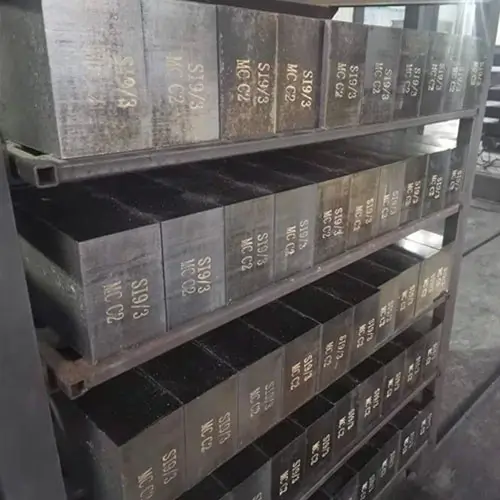
Fused magnesia
Fused magnesia, also known as fused magnesia, is obtained by melting magnesite or sintered magnesia in an electric arc furnace at 2500℃, followed by cooling and crushing. The purity of fused magnesia is determined by the purity of the raw materials. Its main crystalline phase is periclase, which crystallizes from the melt. Periaclase crystals are large, dense, and have a high degree of direct crystal contact, exhibiting excellent water and slag resistance in the atmosphere. It also has good high-temperature volumetric and chemical stability, remaining stable in an oxidizing atmosphere at 2300℃. The performance indicators of magnesia-carbon bricks are directly related to the performance indicators of magnesia. To improve the performance of magnesia-carbon bricks, it is necessary to increase the MgO content to enhance the direct bonding of periclase in the magnesia. Controlling the C/S ratio can reduce the amount of silicates and decrease the degree to which periclase is separated by the silicate phase. Therefore, magnesium content and calcium-silicon ratio are important indicators for evaluating magnesia, as shown in Table 1.
Table 1 shows that a suitable calcium-silicon ratio is less than 1 or greater than 1. A high calcium-silicon ratio is beneficial for improving the stability of magnesium coexisting with graphite at high temperatures. The size of periclase grains and the bulk density of magnesia significantly affect the corrosion resistance of magnesia-carbon bricks. Matsuo Akira et al. studied the production of magnesia-carbon bricks from magnesia with different grain diameters of periclase and measured their weight loss under a high-temperature reducing atmosphere. The results showed that for magnesia-carbon bricks made from magnesia with different grain diameters of periclase, the larger the periclase grains, the smaller the weight loss. Therefore, in the production of high-performance magnesia-carbon bricks, fused magnesia with a CaO/SiO ratio < 1 or CaO/SiO > 2, high bulk density, and well-developed crystal morphology should be selected as the raw material.
Graphite
Graphite possesses excellent thermal conductivity and refractoriness, with a melting point as high as 3500℃. It has a low coefficient of thermal expansion (1.4×10⁻⁶ at 1000℃), high thermal conductivity, and good resistance to rapid heating and cooling; it is one of the few materials whose strength increases with temperature. Graphite also has a relatively large wetting angle with slag and exhibits no eutectic relationship with Al₂O₃, SiC, or SiO₂, effectively preventing slag from penetrating into the product. Since carbon can reduce iron oxide in the molten slag to metallic iron, it increases the viscosity of the slag, reducing the migration of slag components into the brick and thus reducing erosion.
The main role of graphite in carbon-containing products is to effectively prevent slag from penetrating the brick structure. This is achieved by increasing the wetting angle between the working surface of the brick and the slag, and by reacting with MgO in the brick to reduce metallic magnesium while generating CO gas. The pressure of the gas prevents slag penetration, while magnesium diffuses, volatilizes, and oxidizes on the working surface of the brick, forming a dense, impermeable MgO layer. This creates a strong reducing state within the brick, reducing iron oxides in the slag and increasing slag viscosity, thus preventing slag from penetrating the brick. Graphite with stronger erosion and slag corrosion resistance has a higher carbon content and larger flakes. The SiO2 content in graphite is related to the erosion index of magnesia-carbon bricks as follows, as shown in the figure:
As shown in the figure, the erosion index increases with increasing SiO2 content, while the erosion resistance decreases. When the SiO2 content in graphite exceeds 3%, the erosion index of magnesia-carbon bricks rises sharply, and their erosion resistance decreases drastically. With increasing flake graphite particle size, the oxidation resistance of magnesia-carbon bricks increases. However, when the particle size exceeds 0.125 mm, the increase in oxidation resistance slows down; the suitable graphite particle size is 0.125 mm. Because graphite easily oxidizes to form CO, oxidized graphite loses these excellent properties, reducing the erosion resistance of refractory materials. This is a fatal weakness of graphite and a major cause of damage to carbon-containing materials.
Binder
Despite its low content, the binder is a key technical factor in the production of carbon-containing products. The binder directly affects the mixing and molding properties of the billet, as well as the microstructure of the product. During mixing and molding, the binder needs to have good wettability with refractory aggregates and graphite, and a suitable viscosity to improve the mixing quality and bulk density of the billet.
The main characteristics of the binder are:
(1) Good wettability: It has good wettability with both magnesia and graphite;
(2) It contains little or no harmful components;
(3) The properties of the mixed clay do not change significantly over time, and the chemical reaction with the aggregate is minimal;
(4) During the heating process of the product, the binder should have a high residual carbon rate, and the carbonized polymer should have good high-temperature strength.
Only with good wettability can the binder be evenly distributed on the surface of particles and graphite, forming a continuous network structure as much as possible. After carbonization, a continuous carbon skeleton can be formed, improving the strength and erosion resistance of the product. The type of binder and carbonization conditions directly affect the microstructure and properties of the bound carbon. Different carbonization processes of the binder result in significant differences in the structure of the generated bound carbon. To ensure sufficient strength in the molded brick blank, thermosetting phenolic resin is usually used as a binder in the production of aluminum-magnesium-carbon bricks and magnesia-carbon bricks. The resin used should have suitable viscosity, high carbon content, and high residual carbon rate. Phenolic resin, a substitute for benzo[a]pyrene-rich coal tar pitch, is produced by the reaction of phenol and formaldehyde. Depending on the reaction conditions, the reaction product is phenolic varnish resin or methyl phenolic resin. Because phenolic resin is not thermoplastic when heated, it can ensure the dimensional accuracy of the final product. Compared with graphite, the carbonization product of the resin has a banded lattice structure, which stacks to form a layered structure (polymerized carbon or glassy carbon). During the high-temperature decomposition process, phenolic resin first releases water (from primary phenolic resin), phenol, cresol, and small amounts of xylenephenol and formaldehyde, ultimately forming polymeric carbon.
The synthetic resin can mix well with refractory particles at room temperature without heating, and its char residue is similar to that of asphalt, ranging from 50% to 70%. The main drawbacks of liquid primary phenolic resin are: limited stability, the homogeneity of the resin carbonization products leading to easy oxidation, reduced erosion resistance, and sensitivity to thermomechanical stress. Adding rapidly oxidizing metal additives such as Al, Mg, and Si to the mixture is intended to compensate for these shortcomings.
Additive
The presence of graphite is what gives carbon composite refractories their excellent slag resistance and thermal shock stability. Damage to carbon composite refractories is primarily due to graphite oxidation. Once graphite is oxidized, its advantages are completely lost. To improve the oxidation resistance of carbon composite refractories, small amounts of additives, such as Si, Al, Mg, Zr, SiC, and BC, are often added.
The working principle of these additives will be analyzed from both thermodynamic and kinetic perspectives:
From a thermodynamic perspective: at the operating temperature, the additive, or its reaction product with carbon, has a greater affinity for oxygen than carbon itself, thus being preferentially oxidized and protecting the carbon.
From a kinetic perspective: the compounds formed by the reaction of additives with O2, CO, or carbon alter the microstructure of the carbon composite refractories, such as increasing density, blocking pores, and hindering the diffusion of oxygen and reaction products.
The non-oxides added to carbon-containing refractory materials typically have the following effects:
(1) By reducing carbon monoxide to carbon, the rate of carbon consumption is inhibited;
(2) Carbides or oxides are generated, increasing the densification of the refractory material;
(3) Graphite crystallization is further promoted;
(4) Open porosity is reduced;
(5) A protective layer is formed;
(6) High-temperature strength is improved;