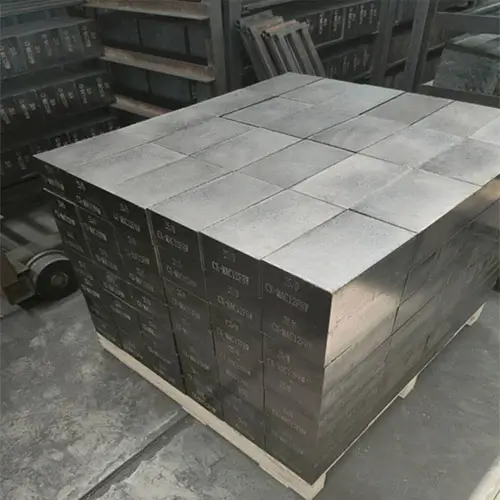
This article analyzes the hazards and potential utilization value of discarded MgO-C bricks, reviews the research results on the reuse of MgO-C bricks and the performance of recycled refractory materials in recent years at home and abroad, lists the common problems and solutions in the reuse of MgO-C bricks, and looks forward to the future development of MgO-C bricks.
Refractory materials are essential for the production of all high-temperature processes, such as metals, cement, glass, and ceramics. It is reported that China accounts for two-thirds of global refractory material production. When refractory materials reach the end of their service life, they must be replaced with new refractory materials made from the raw materials. Initially, due to low raw material and disposal costs, waste refractory materials were often discarded in landfills. However, in the last 20 years, with increasing landfill costs and environmental considerations, the recycling of used refractory materials has received increasing attention.
MgO-C bricks are currently the most widely used refractory material in steelmaking equipment, with applications including oxygen-blown converter linings, ladles, electric arc furnace linings, and slide gates. MgO-C bricks are typically made from over 96% fused magnesia, with the addition of small amounts of antioxidants and binders, making them a high-quality refractory material. Due to the non-wetting properties of carbon-containing refractory materials, used MgO-C bricks are less contaminated and have virtually no slag penetration. After use, MgO-C bricks usually only undergo changes in surface or local chemical composition and structure, while their internal structure and composition remain largely unchanged. Therefore, discarded bricks have high reuse value.
In the past, due to my country’s abundant and inexpensive magnesite resources, the recycling and reuse of used MgO-C bricks did not receive much attention. However, because magnesite is a non-renewable resource, past low-end and inadequate mining methods and the practice of discarding low-grade magnesite for high-grade ore have led to serious waste of magnesite resources, and the exploitable high-quality ore sources are gradually depleting. At the same time, market demand for magnesite is increasing, and coupled with the impact of environmental policies, prices have risen sharply. Therefore, the recycling and reuse of waste MgO-C bricks has gradually become a hot research topic in the field in recent years.
Many Chinese enterprises have successively begun to recycle and reuse waste magnesia-carbon refractories. Practice has proven that with proper processing, used magnesia-carbon refractories can yield high-value-added refractory raw materials. Reusing this secondary raw material can not only reduce production costs but also greatly benefit resource conservation and environmental protection. However, current research on used MgO-C bricks lacks stability and systematicity. This article summarizes the recycling and reuse of used MgO-C bricks in recent years, lists common problems and solutions in the reuse process of MgO-C bricks, and looks forward to the future development of used MgO-C bricks.
2.Recycling and reuse technology of MgO-C bricks after use
2.1 Regenerated MgO-C Bricks
The preparation of recycled MgO-C bricks from waste MgO-C bricks is an early technology for reusing used MgO-C bricks, with a high recovery rate and good application results. Due to the chemical reactions in the metallurgical process, the composition and structure of MgO-C bricks change after use. Therefore, it is necessary to process them into secondary granular raw materials that meet the standards before producing secondary MgO-C bricks. After manual sorting, the slag layer and adhering fire clay are removed by manual knocking or scraping. Iron fragments that may be trapped in the cracks are removed by magnetic separation. In addition, since MgO-C bricks usually contain additive Al powder, at high temperatures, Al powder reacts with carbon (C) to form aluminum carbide whiskers (Al4C3). Aluminum carbide reacts with water, causing volume expansion, which leads to pulverization and cracking of MgO-C bricks. Therefore, after crushing, hydration treatment is usually required to remove aluminum carbide in advance. The obtained secondary granular raw materials are mixed with supplementary raw materials in a certain proportion and then shaped to produce recycled MgO-C bricks.
Firstly, research revealed that remanufactured MgO-C bricks containing 30% recycled materials have essentially the same performance as low-grade MgO-C bricks. Furthermore, the recycled MgO-C bricks have the potential to be used to manufacture different grades of remanufactured bricks based on the purity of MgO and graphite in the recycled materials. Tian Shouxin et al. successfully developed high-quality recycled MgO-C bricks using MgO-C bricks salvaged from a 40-ton ladle slag line and electric arc furnace lining of a steel plant as raw materials. Compared to the MgO-C bricks used at the time, the recycled MgO-C bricks showed no significant difference in performance during and after use. Specifically, using 80% recycled MgO-C brick material (MgO content of 80%) for recycled MgO-C bricks resulted in the best performance in both room temperature and high temperature tests. When used on a 300-ton ladle slag line, its performance was better than that of new magnesia-carbon bricks used in the same period. The bricks can be reused up to 8 times, with a slag penetration thickness of only 1.8 mm per furnace. Practice has shown that recycled magnesia-carbon bricks with an 80% addition content can achieve the same performance level as Baosteel’s normal MgO-C bricks, and are suitable for various refining conditions. In 2010, Tian Shouxin et al. used MgO-C bricks from ladle use with a mass fraction of 64%–88% to produce recycled MgO-C bricks and recycled Al2O3-MgO-C bricks. Their performance indicators reached the level of high-quality MgO-C bricks, and their performance on ladles was significantly better than the original MgO-C bricks, with a 15% increase in service life.
Zhang Guodong et al. used recycled magnesia-carbon bricks from a 180-ton ladle slag line as raw material, and after crushing, hydrating, tamping, and screening, prepared five types of recycled slag line MgO-C bricks with different addition and mixing amounts. Their research found that to ensure the produced MgO-C bricks meet industry standards, the amount of recycled bricks added should not exceed 60%. This is because recycled bricks contain a significant amount of loose, pseudo-particles and small-volume residual carbon, making the material difficult to mix evenly and resulting in low molding density. This is the main reason why the density and strength of recycled MgO-C bricks decrease, and their high-temperature performance deteriorates, with increasing amounts of recycled material added and mixed.
Arianpour et al. studied the properties of sintered magnesia bricks and whole-block rammed mixtures containing 10%–30% recycled MgO-C aggregate recovered from electric furnaces and ladles. They found no significant difference in chemical composition between the new and waste refractories. Compared to the virgin material, the recycled aggregate had lower strength and density, and higher porosity.
2.2 Synthesis of Magnesium Aluminum Spinel
The main difference between synthetic MgO-C spinel technology and recycled MgO-C brick technology lies in the raw material composition and particle size. Recycled MgO-C brick raw materials contain large, medium, and fine particles, with large particles accounting for nearly half, while synthetic spinel typically requires particles smaller than 0.074 mm. In addition to waste MgO-C bricks, aluminum-based materials such as recycled aluminum-chromium slag and aluminum-carbon sliding plates need to be added.
Using waste aluminum-chromium slag and MgO-C bricks from a factory as raw materials, after processes such as slag layer removal, crushing, screening, and magnetic selection, the two materials were calcined at 1500℃ for 2 hours to synthesize magnesium-aluminum spinel material with a purity of 94%. Results showed that the highest yield of magnesium-aluminum spinel sample, reaching 94%, was obtained when the ratio of MgO:Al2O3 = 2:1 (i.e., 40% MgO-C bricks and 60% aluminum-chromium slag). Scanning electron microscopy revealed a typical octahedral structure with complete crystallization and tight molecular bonds.
Magang (Mainland China Iron & Steel Group) synthesized magnesium-aluminum spinel using recycled MgO-C bricks and used skateboard material. Magnesium aluminum spinel was successfully prepared using waste MgO-C bricks and used waste slide plates with a Mg:Al ratio of 1:1 (the theoretical composition of spinel). This verifies the possibility of preparing recycled magnesium aluminum spinel using waste MgO-C bricks and used slide plates. Among them, the sample with a 1:1 formulation and fired at 1400℃ for 2 h produced the highest spinel content.
2.3 Preparation of converter modifier
After tapping steel from the converter, a portion of slag needs to be retained for slag splashing and furnace protection. However, the slag after tapping usually does not meet the requirements for slag splashing and furnace protection. To modify it, a final slag modifier can be added to the final slag of the converter. The main crystalline phase of waste MgO-C bricks, periclase, has stable chemical properties and generally exhibits strong resistance to alkaline slag. Furthermore, MgO-C bricks contain a high proportion of magnesium oxide and carbon, which are the main components of the slag modifier used in the slag splashing and furnace protection process. Therefore, used MgO-C bricks can be recycled to produce a modifier.
Lightly calcined dolomite can enhance the fluidity of steel slag in steelmaking and has the ability to adjust the proportion of MgO in the steel slag. Wu Hanyuan et al. used a briquetting machine to produce 20 mm magnesium spheres from MgO-C bricks, dolomite, and bentonite in a ratio of 85:15:1, and applied them in the early and late stages of a 100 t converter. When added in the early stage, the components in the magnesium spheres participated in slag formation, improving the fluidity and permeability of the slag and reducing erosion of the furnace lining. Added at the final stage of converter smelting, the magnesium oxide content is increased. Furthermore, the carbon in the magnesium balls reacts with the iron oxide in the slag, effectively defoaming, pressing down slag, and protecting the furnace lining. Subsequently, using recycled MgO-C bricks as the main raw material (from the converters and ladles of the Second Steelmaking Plant of Baosteel Group Bayi Steel Company), and tundish coating waste as the main binder, the two were mixed at a 6:4 mass ratio and pressed into magnesium balls, which were then applied to the 120-ton converter steelmaking process. The pressed magnesium balls were added during the anti-slag-splashing process. Results showed that adding magnesium balls resulted in better slag adhesion in the furnace than using dolomite, and saved 0.55 yuan in production costs per ton of steel produced, while reducing the amount of steel slag and the amount of metal lost from the slag. Simultaneously, the graphite carbon component in the magnesium balls achieved the goals of defoaming, pressing down slag, and thickening the converter slag.
It is important to note that the content of magnesium oxide and carbon varies significantly depending on the particle size of the used MgO-C bricks, which greatly affects the performance of the modifier. Therefore, it is necessary to crush and screen the used bricks of various particle sizes, and then test the composition of the treated raw material particles. To select the optimal formulation, the requirements of the finished modifier must be followed, and raw material particles of various sizes should be mixed in different proportions and prepared into specified specifications. Zheng Wan et al. adjusted and improved the composition of the converter slag modifier prepared using waste MgO-C bricks as raw materials. The particle size distribution of the waste MgO-C bricks was 0.6 mm:0.1–0.6 mm:0.6–1 mm = 3:4:3. Besides the amount of waste MgO-C bricks used, the amount of water and binder added also affects the strength of the modifier. Within a certain range, an increase in water leads to an increase in strength, while an increase in binder leads to a decrease in strength. Based on the above, the optimal batching scheme was adjusted, and the composition of the MgO-C brick base modifier is as follows: 60% MgO-C bricks after use, 5.7% magnesite, 10% graphite powder, 0.1% binder, and 10% water.
2.4 Other Technologies
In addition to recycled MgO-C bricks and synthetic magnesium aluminum spinel, used MgO-C bricks can also be used to prepare tundish dry materials, converter repair materials, magnesia-carbon coating materials, ladle edge materials, etc. The process flow is similar to that of recycled MgO-C bricks, with slight differences in raw materials, proportions, and operation details. The main raw materials of recycled spraying material are used MgO-C bricks and sintered magnesia fine powder. Considering the requirements of the spraying material for adhesion rate, the proportion of small particles can be appropriately increased. Because the spraying process of the ladle is hot spraying, that is, the moisture in the sprayed layer evaporates immediately when the spraying material is attached, which leads to the Al4C3 in the spraying material not being hydrated. Therefore, the treatment of used MgO-C bricks does not require hydration pretreatment. Adding additives and then performing a bridging operation aims to reduce the bonding strength of phenolic resin in the brick, so that the aggregate and matrix of the used MgO-C brick can be separated more easily in the above crushing process, thereby reducing the content of false particles and accelerating the hydration of Al4C3 in the brick.
Yuan Tianyi et al. prepared a dry tundish material using medium-grade magnesia and used magnesia-carbon bricks as the main raw materials. Among them, the comprehensive performance of the recycled particles after shaping was better than that of the unshaped particles. When the amount of shaped particles added was 30%, the dry material could meet the requirements of the continuous casting process, and there was no significant difference in the performance of the original dry material. However, since graphite hinders sintering and affects high-temperature strength, the amount of recycled material added from used MgO-C bricks should not be too much.
Adding recycled ladle spray material from used MgO-C bricks can significantly improve its slag penetration resistance. Because the addition of MgO-C bricks increases carbon content and water demand, leading to decreased density and sintering difficulties, Yao Jinfu et al. set the addition amount at 20% and conducted five spraying tests on the ladles of Meigang Steel Plant. Its durability reached 6 heats, and the spraying adhesion rate was good and the curing speed was fast, which can replace the original spraying material. Peng Xuefeng et al. used waste MgO-C bricks and MS95 sintered magnesia as the main raw materials, modified asphalt as the binder, and added anthracene oil, B4C powder and Al powder to prepare converter hot repair materials with different proportions. They were applied on the 60 t converter of Maanshan Iron and Steel and can be used for more than 40 heats. The study found that the performance of the repair material with 19% modified asphalt was better; at the same time, the addition of 3% Al powder and 0.5% B4C powder can improve the strength and oxidation resistance of the repair material. Laiwu Steel’s Wu Guangjun discovered through experiments that the reuse pathways and methods for used MgO-C bricks of different forms and qualities are different, and their reprocessing procedures cannot be generalized. Therefore, he developed a gradient utilization technology for MgO-C bricks used in ladle slag lines. For used MgO-C bricks with large residual thickness and relatively intact appearance, they can be directly used to repair the tundish working lining of the shaped billet continuous casting machine after simple cutting according to size; while for used MgO-C bricks with small residual thickness and relatively poor appearance quality, it is necessary to carry out processes such as removing the corrosion layer, crushing, hydration treatment, bridging, iron removal, and screening to produce recycled raw materials with different particle sizes, which are then prepared into recycled magnesia-carbon coating materials, etc. This technology achieves optimal benefits and maximizes cost savings for MgO-C bricks, realizing closed-loop reuse of used magnesia-carbon bricks in steel plants, reducing the consumption of baking gas in continuous casting tundishes and the emission of waste MgO-C bricks. Gong Xiumin used waste MgO-C bricks and coke as the main raw materials, and conducted a comparative study on the changes in the performance of ladle lining material by continuously adjusting the amount of recycled MgO-C bricks and borosilicate glass used. He found that when the amount of recycled MgO-C bricks and borosilicate glass used were 15% and 0.5%–1% respectively, the performance of the ladle lining was significantly improved, exhibiting high strength, strong slag resistance, and excellent thermal shock resistance. Based on these improved performance characteristics, this formula was applied to 80-ton ladles at Laiwu Steel, and the lining material could be used up to 50 heats, a 40% increase compared to the previous 30 heats.
After use, the MgO-C bricks can also serve as a permeable reaction barrier to treat groundwater contaminated with nickel and cobalt. MgO has been proven to be an effective precipitant for divalent metals in water as a reaction medium since the 1980s. The main removal mechanism is the formation of hydroxide precipitates. When MgO comes into contact with water, it hydrates on its surface to form magnesia (Mg(OH)2). These conditions are conducive to the precipitation of various amphoteric metals in the form of hydroxides. Carl D R et al. converted MgO-C bricks into granular media suitable for reactive permeability barriers and found that they had high removal rates for nickel and cobalt pollutants in groundwater.
3.Main problems and solutions
3.1 Problem of fake particles
Pseudo-particles and residual carbon in recycled materials are often the cause of decreased strength and oxidation resistance of samples at both room and high temperatures. Pseudo-particles have numerous pores and cracks, resulting in lower bulk density, which typically reduces the bulk density of recycled products during reuse. The presence of residual carbon also makes the material difficult to wet with resin and hard to mix evenly. The problem of pseudo-particles can be improved by selecting a suitable roller mill and adjusting the roller grinding time. Sufficient friction must be maintained between the roller and the material, and between the material and the base plate, to prevent material accumulation. The treated magnesium-carbon granules then undergo secondary sieving to remove undersize powder.
3.2 Hydration Issues
Antioxidants such as aluminum or silicon are often added to refractory materials to protect carbon from oxygen damage. However, these antioxidants can cause problems during recycling. For waste MgO-C bricks with added aluminum powder as an antioxidant, the recycled magnesia-carbon particles need to be pre-hydrated to remove aluminum carbide in advance, so as to avoid cracking of new refractory materials during production. Cracks are caused by the expansion and hydration of aluminum carbides and nitrides formed by aluminum during use. Song Wei found that the effect of pre-hydration treatment varies with different hydration temperatures, times and amounts of water added, and gave specific solutions: for aluminum carbide samples with a size of Φ13 mm×2 mm, the best effect is achieved when hydrating with 24 mL of water for 6 h at 25℃; the best effect is achieved when hydrating with 16 mL of water for 4 h at 60℃; and the best effect is achieved when hydrating with 10 mL of water for 6 h at 90℃.
4.Summary and Outlook
Rising raw material prices and environmental requirements have driven continuous advancements in the recycling and reuse technology of used refractory materials, and public awareness of recycling has also gradually increased. Considering factors such as material composition, feasibility, and recycling costs, used MgO-C bricks represent the most promising type of used refractory material for recycling projects. Currently, used MgO-C bricks have become an important component of refractory raw materials. However, due to the varying original specifications and post-use conditions of MgO-C bricks from different companies, it is difficult to systematically and uniformly process used MgO-C bricks. Furthermore, the performance stability of some recycled products is currently not high, and the reuse cost needs further reduction. Equally challenging is that factors beneficial to the performance of used MgO-C bricks often detrimental to the lifespan of the original bricks. High-performance MgO-C bricks are generally less suitable for recycling than low-performance ones. For example, higher carbon content generally leads to better stability, but also increases the formation of Al₄C₃ during use, complicating hydration treatment and hindering recycling. This inherent contradiction is a problem that needs to be addressed and overcome.
To effectively solve these problems and achieve efficient utilization of used MgO-C materials, companies in the used refractory material supply chain and research institutions should strengthen communication and cooperation to develop a precise and systematic application technology solution. Strict quality control is essential at every stage of the production process. Furthermore, while striving to improve the reuse rate of used MgO-C bricks, it is equally important to improve their quality, extend their service life, and reduce replacement frequency to fundamentally address cost and environmental issues to the greatest extent possible.