
Refractory materials in a steel ladle exert a multifaceted influence on the quality and temperature drop of molten steel. Given this reality, the selection and composition of refractory materials should be scientifically adjusted during ladle operation to ensure they function effectively and appropriately, thereby creating favorable conditions for subsequent production processes.
(1) Based on historical data, the chemical nature of ladle refractories tends to shift from alkaline to neutral and eventually to acidic during service, a process accompanied by a continuous rise in temperature. The combined effect of these factors leads to an increase in the oxygen potential index of the refractories, thereby enhancing their capacity to transfer oxygen into the molten steel. In this oxygen-rich environment, metallic elements within the molten steel undergo oxidation, resulting in the formation of impurities that compromise the overall quality of the steel. Consequently, to safeguard steel quality, enterprises must rigorously evaluate the oxygen potential index when selecting ladle refractories. This proactive approach helps prevent excessive oxygen ingress into the molten steel at the source—during the actual operation of the ladle—thereby ensuring the quality of the steel.
(2) The particle size distribution of ladle refractories should be carefully determined based on the specific operating environment and processing requirements of the ladle; an imbalance in this distribution can directly affect the temperature control of the molten steel. To optimize performance, most enterprises in my country employ a balanced blend of coarse, medium, and fine particles. In terms of structural composition, coarse particles serve as the framework, providing structural integrity and extending the service life of the refractory material, while fine particles act as the matrix, which is closely linked to the material’s overall strength and density. Research data published by a scientific institution indicates that variations in the proportions of these particles lead to significant differences in the rate of temperature drop in molten steel, as illustrated in Table 1.
Comparative analysis reveals that the particle size distribution and the size of the particles themselves have the most direct impact on temperature loss. Given the operating environment of ladle refractories, the specific parameter requirements, the need to maintain molten steel quality, and the necessity of controlling temperature loss, it is essential to carefully select the particle size distribution for ladle refractories. To ensure the practicality of this selection, technical personnel must further optimize the particle size distribution by taking into account the ladle’s capacity and its operating temperature.
(3) During the production process, to ensure the quality of the molten steel and enhance the ladle’s temperature-control capability, the ladle typically requires preheating (baking). This ensures that the internal temperature profile of the ladle remains within an appropriate range during the transport and processing of molten steel. In practice, however, many steel and foundry enterprises fail to preheat their ladles. Even when preheating is performed, it is often ineffective—frequently due to a lack of experience or other factors—resulting in poorly designed heating profiles. During the transport and refining of molten steel, any moisture present reaches its boiling point and escapes from the ladle refractories in the form of vapor. This rapid release of water vapor creates a multitude of channels within the refractory material; these channels accelerate heat dissipation from the molten steel, making it significantly more difficult to control temperature loss.
The moisture present in refractory materials originates primarily from water adsorbed by the aggregate, water of crystallization, and moisture released from various additives upon heating. To ensure proper operational conditions, all moisture within the refractory material must be completely removed at temperatures below 800°C. If any moisture remains at temperatures above 800°C, it can lead to the formation of numerous honeycomb-like voids within the refractory matrix, subsequently causing cracks—a development that poses a significant risk to the safety of downstream operations. Therefore, when using refractory materials for steel ladles, it is essential to carry out proper moisture removal (dehydration) to ensure both thermal control and operational safety, thereby preventing any damage to the structural integrity and strength of the refractory material itself. To achieve this, technical personnel can employ a low-temperature drying process; this allows for the controlled release of water vapor, ensuring that the rate of escape remains within an appropriate range and effectively preventing the formation of cracks in the refractory material.
(4) During the low-temperature preheating phase, to ensure the effectiveness of the ladle preheating process, personnel should establish appropriate preheating temperatures and durations—and streamline the overall procedure—based on the specific heating curves of the refractory materials. In practice, particular attention should be paid to three critical temperature thresholds: 85°C, 200°C, and 800°C. Heating the refractory material from room temperature to 85°C serves to reduce the pore size within the material’s capillary network; this slows the rate at which water vapor escapes, thereby preserving the structural integrity of the refractory lining. Raising the temperature from 85°C to 200°C facilitates the rapid hardening and drying of the refractory material—once the bulk of the water vapor has been released—thereby enhancing its structural strength. Gradually increasing the temperature to 200°C also ensures that the refractory material develops the necessary environmental adaptability, allowing it to function effectively across a range of temperatures and setting the stage for subsequent high-temperature operations.
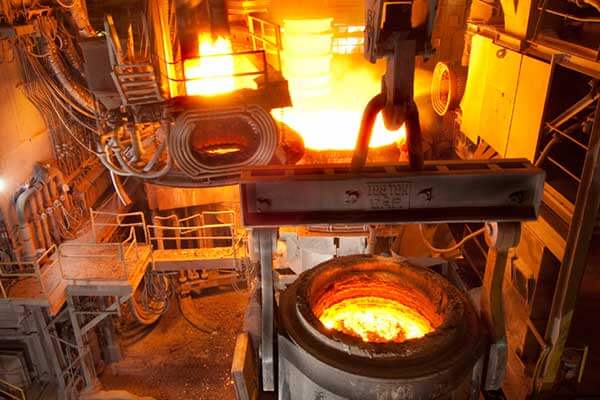
Ladle Furnace